





A Dog in an Apartment and a Work Schedule: Does Your Routine Fit?

Yes, you can have a dog in an apartment even if you work, but whether it is a good fit depends on your actual routine, not just the size of your home or the dog. Check how long the dog would be alone, who can take it out and care for it during the day, and what arrangements you have for delays. A puppy or a newly arrived dog may need more company than your usual schedule allows.
How much time do you have for a dog on a typical day?
Start with a typical week, not a week off work. Note when the last person leaves and when the first person returns, including commuting, shopping and other foreseeable delays. This interval shows how long the dog would be without company or help.
Then schedule walks, meals, cleaning, grooming and periods for play or training. It is not enough for someone to be at home if their whole day is taken up with meetings and they cannot take breaks. Similarly, a rushed walk before work does not automatically replace the time needed for exploration and interaction.
Check the most difficult days separately: days at the office, extended shifts, children’s activities and weekends spent away from home. If the plan works only when nobody is delayed, you need a backup.
Two work schedules: which leaves room for care?
The two scenarios show how the same home can provide different conditions, depending on the arrangements. They do not establish a universally acceptable length of time to be away and do not replace an assessment of a specific dog.
Schedule A has the advantage of someone being able to observe the dog and step in. However, working from home does not mean being available at all times: establish whether breaks can actually be taken and who takes responsibility when that person is away.
Schedule B, as described, offers no solution during the day. A trusted person, dog walker or another option suited to the dog could change the situation. If support cannot be arranged consistently, the responsible choice may be to postpone getting a dog.
In either case, a puppy or newly arrived dog may need more company and more frequent outings than the usual routine allows. Plan the settling-in period before setting the arrival date.
| Criterion | Schedule A: support during the day | Schedule B: continuous absence |
|---|---|---|
| Before work | Walk and meal; one family member works from home later. | Short outing and meal; both adults leave for the office. |
| During the day | The person at home can take a break to take the dog out and monitor its needs. | The dog is left alone from departure until return, with no support arranged. |
| Evening | Walk, interaction and time to rest. | The family returns after work and commuting; a walk depends on the energy and availability they have left. |
| What to check | Are breaks possible even on meeting-heavy days? Is there a plan for work trips? | Who can come in the middle of the day? What happens if a delay comes up? |
How do you organize the time your dog spends alone?
Time alone needs to be prepared for, not assumed. Even when the eventual schedule seems convenient, a newly arrived dog needs to get to know the home, the people and the routine before being left alone for longer periods.
In the first few days, arrange for an adult to be present and plan outings so you can observe the dog’s needs. For a puppy, discuss care and appropriate outings for its situation with a veterinarian.
Prepare for departures gradually
Once the dog has settled into your home, practise very short departures, returning calmly and observing the dog’s reaction. Increase the duration gradually only if the dog remains comfortable. The pace varies: a dog tolerating a short absence does not guarantee it will immediately tolerate a longer one.
You can prepare a safe resting place, water and activities suited to the individual dog. Test any items you provide while you are present, and avoid leaving within reach anything the dog could swallow or damage. Do not use confinement as punishment.
Notice when the plan isn’t working
Persistent vocalizing, restlessness or damage to objects during departures can indicate a problem, but do not by themselves establish the cause. If possible, a recording of the time you are away can help you describe the situation more precisely.
If you notice distress or a change in behavior, talk to a veterinarian and, if needed, a canine behavior specialist who uses gentle methods. Do not punish the dog for what you discover when you return; look for the cause and adjust the plan.
How do you share walks and responsibilities in the family?
Plan outings that meet both toileting needs and the need for exercise and exploration. The duration and pace should be adjusted to the individual dog, its age, health, the weather and your veterinarian’s recommendations; there is no one schedule that suits all dogs.
Choose routes that are accessible on workdays and think about where the dog can go safely. In an apartment building, the way outside matters too: the elevator, stairs, crowds and noises may require time to get used to. If the dog has difficulties, do not force it; seek guidance suited to the situation.
In addition to walks, set aside time for interaction, simple activities and rest. A schedule full of activities is not a solution if the dog also has no quiet place to retreat to.
Share responsibilities before the dog arrives
Agree on who handles the morning outing, who covers the middle of the day and who takes care of the evening. If there are children in the family, an adult remains responsible for supervision and making sure tasks are completed, even if the children help.
Also choose a backup person. Check in advance that they agree, can access your home and can handle the dog safely. Include the cost of paid help in your budget if your plan depends on it.
Chihuahua or Labrador Retriever: what should you compare beyond size?
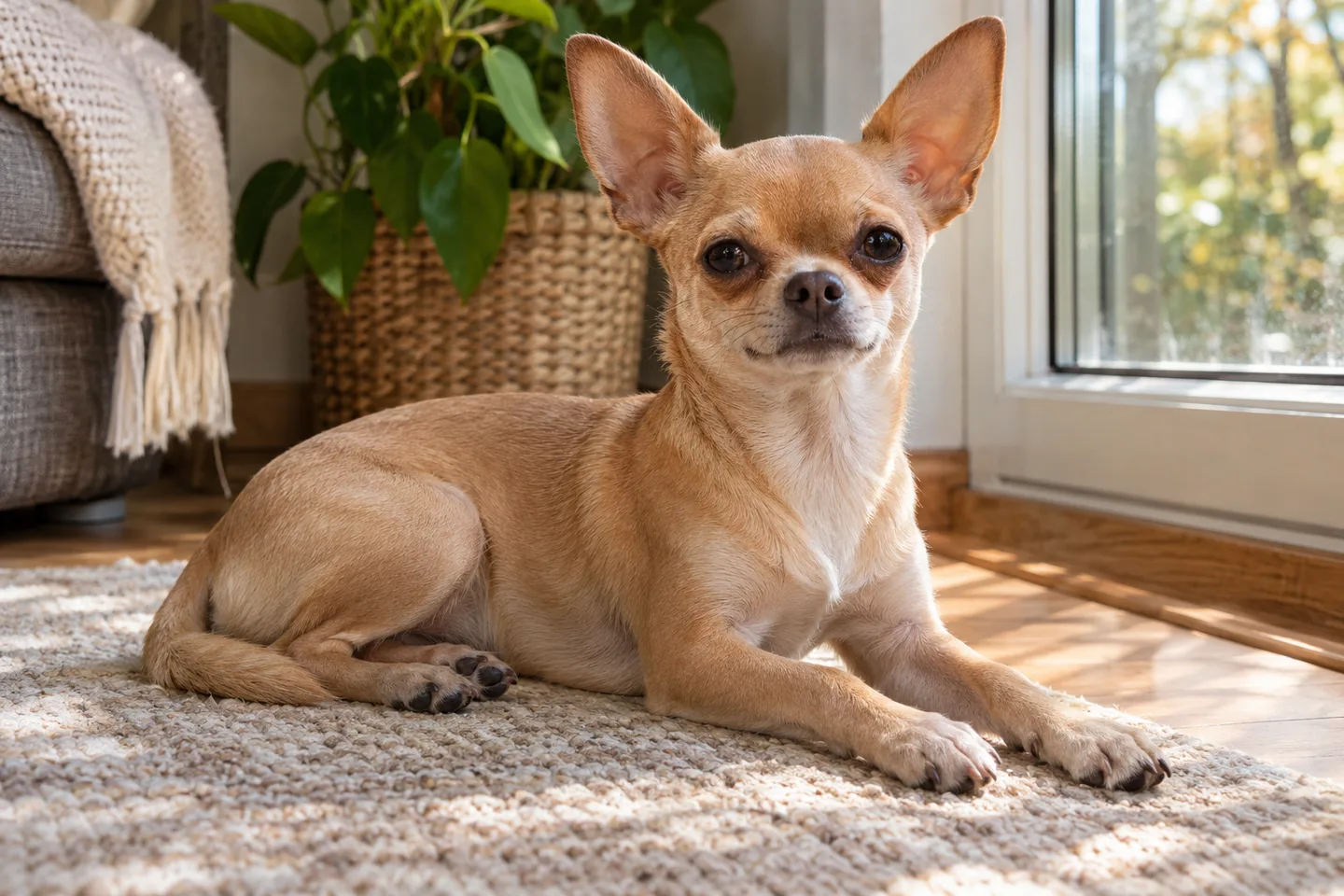
A Chihuahua and a Labrador Retriever can be starting points for comparison, not automatic answers. A Chihuahua takes up less physical space than a Labrador Retriever, but size does not tell you how well an individual dog will tolerate being alone or how much attention it will need.
For a Labrador Retriever, consider the space needed to move around and rest comfortably, as well as how outings and activities will be arranged. A larger dog may also be physically harder for some people to manage. For a Chihuahua, think about how you will provide attentive interaction and a safe environment, including if there are young children in the family.
For either of these examples, ask about the specific dog: its age, observed behaviors, experience with people and how accustomed it is to an indoor routine. Do not assume that a small dog does not need walks or that a large dog should automatically be ruled out for apartment living.
Compare the information you receive with your routine and, if possible, meet the individual dog in suitable circumstances before deciding. Individual characteristics and the quality of care matter more than a label such as “good for apartments.”
Checklist before making a decision
Before choosing a dog, answer these questions concretely: who is home and when; how long the usual absence lasts; who handles outings; who steps in if there is a delay; and what budget is available for food, care, veterinary services and possible help with walks?
Add two useful tests. First, simulate a few days by keeping to the times you would take the dog out, including in bad weather. Second, discuss with every family member the tasks they can realistically commit to. A simulation cannot reproduce all an animal’s needs, but it can reveal scheduling obstacles.
Signs that it may be better to wait include long absences without a support plan, being unable to cover expenses or not having an adult who will take responsibility. You can reconsider after a change in schedule or once you find reliable help.
If you would like help choosing, BucuriaCasei is an intermediary agency, not the breeder or seller of the individual dog. You can discuss your family’s profile and actual schedule, then ask for details about the proposed dog and the person offering it. A matching recommendation does not replace your own checks and responsibilities.
Frequently asked questions
Can I have a dog if I work full time?
Yes, it is possible if your schedule includes hands-on care, breaks suited to the dog and a reliable solution for absences. If the dog would be left alone all day without support, postpone the decision or reorganize your routine.
Can a small dog be left alone longer than a large one?
There is no such rule based on size. Age, health, past experiences and how the dog has been accustomed to absences all matter.
Is it enough to take my dog out only in the morning and evening?
It depends on the dog and the time between outings, but two outings are not automatically enough. A puppy, a senior dog or a dog with particular needs may require extra breaks; discuss the individual situation with a veterinarian.
If I work from home, will my dog automatically accept being left alone?
No. Your constant presence does not automatically teach your dog to cope with departures. Practise short, gradual absences and observe how it reacts.
Is dog daycare a solution for every schedule?
Not necessarily. It may be an option for some dogs, but the quality of supervision, compatibility with the environment and transportation should be assessed first. Some dogs may prefer individual care.
How can I tell whether a particular dog is a good fit for my family?
Describe your actual schedule and ask for information about the individual dog’s age, behavior, needs and known experiences. Then compare them with the time, budget and support you can provide, without relying on breed alone.
A dog can live well in an apartment with a family that works if its routine provides care, outings and companionship suited to its needs. Compare typical days with difficult ones, arrange backup support and choose a dog you can realistically care for. For the next step, you can explore the breed pages or BucuriaCasei’s matching service.