Bullmastiff for sale
8.100,00 Lei
Recently sold puppies
Female Bullmastiff.
www.BucuriaCasei.ro
#bullmastiff #bullmastiffs #bullmastiffx #bullmastiffpuppy #bullmastifflove #bullmastiffsofinstagram #bullmastifflovers #bullmastifflife


Female Bullmastiff with pedigree.
www.BucuriaCasei.ro
#bullmastiff #bullmastiffs #bullmastif #bullmastiffpuppy #bullmastiffnation #bullmastiffofinstagram #bullmastiffaddicted
Are you looking for a dog of the breed? Bullmastiff for sale?
- From BucuriaCasei you can buy a Bullmastiff puppy healthy, vaccinated and vet checked to ensure you receive a quality pet.
- We strive to offer only the best specimens selected from responsible breeders, carefully crossed to ensure good temperament and health.
- We offer assistance and advice to help you choose the right breed for your family's needs and lifestyle.
Undecided? Here are 5 reasons to buy a Bullmastiff from BucuriaCasei:
- Protecting the family: Bullmastiffs are a protective and loyal breed, who enjoy being part of their family and protecting them.
- Security skills: The Bullmastiff is a strong and courageous dog that can be a good guard for property and family.
- Large size: Bullmastiff is a large breed that can be impressive and imposing.
- Calm personality: the Bullmastiff is a calm and docile breed that adapts well to family life and is not prone to aggression.
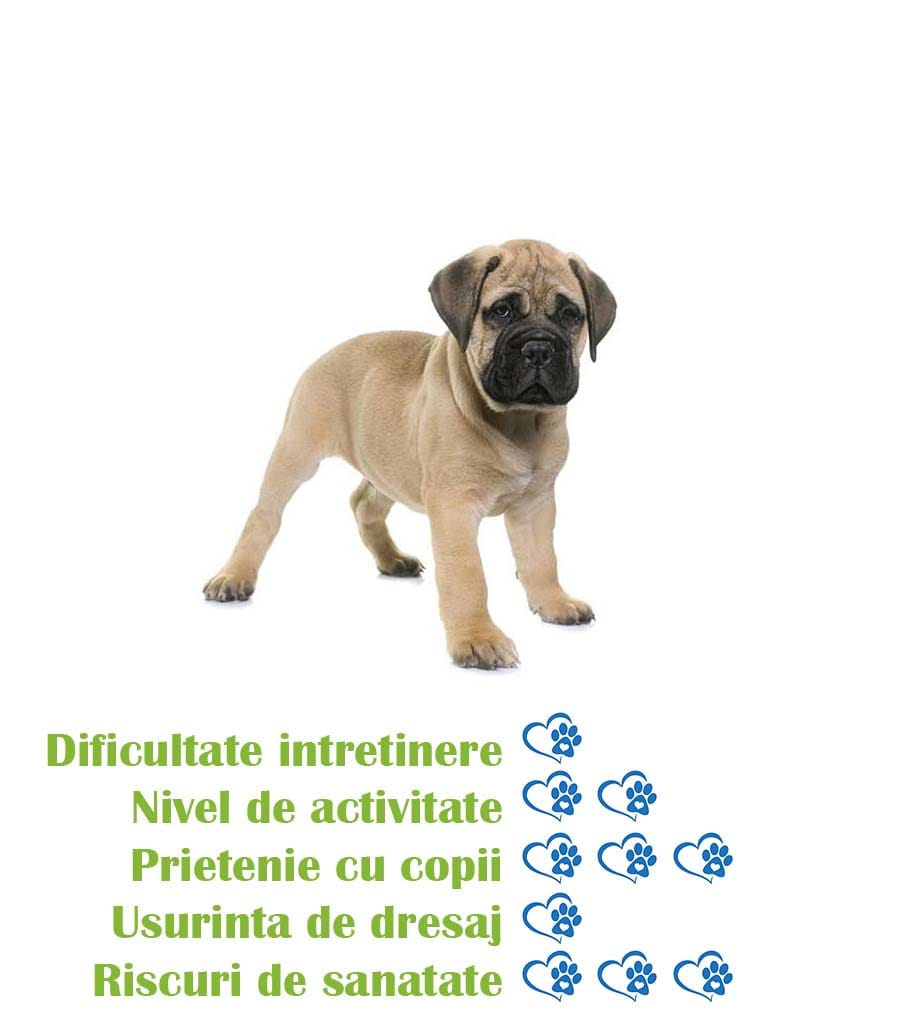
- Easy care: The Bullmastiff has a short coat and is relatively easy to care for, with regular brushing and occasional washing being sufficient.
Order form
Essential products for your puppy



Why people choose BucuriaCasei?
Make enquiries on Own Account
Send request on BucuriaCasei
We are proud and honored to have helped over 3000 dog-loving families in Europe over the past 14 years. And many of them are happy to come back to us, often years later, to give us a snapshot of their happy lives.
Let the pictures speak for themselves! ☺️
#maltipoo #maltipoonation #maltipoolife #maltipoolovers #maltipoolove reviews
✨ Sirius grows beautifully, step by step ✨
We are back with news from little Sirius, who is already starting to show how smart he is 💛
With almost a pound of energy and personality, he's a real eater, inquisitive and very aware of what's going on around him.
We are very happy to see that he has already learned to sit, wait and eat quietly - a clear sign that he is adapting perfectly and is receiving lots of care and love.
Such updates confirm that every chicken gets exactly where it needs to be:
👉 in a family that raises him beautifully.
#yorkshireterriertoy #yorkshire #yorkshireterrier #yorkshirelovers #yorkshirelife review
✨ Love at first sight ✨
Sometimes you don't need days or weeks...
👉 5 minutes is long enough for a puppy to find its place in your heart. 🐶💛
Little Maltipoo came home full of energy, curious, friendly and ready to make lifelong friends. Just the kind of start that confirms that every puppy gets where it's supposed to go.
For us, such messages mean a lot.
It means the joy is really getting there.
Thank you for your trust and love! 🤍
#maltipoo #maltipoodle #maltipoonation #maltipoolife #maltipoolovers reviews
Reddish Dwarf Pudding - review 1 year.
www.BucuriaCasei.ro
#pudel #pudeltoy #poodle #poodlelover #poodlelife #poodlemix #poodlegram #poodlegram #poodlegram #poodlegram #poodlegram #poodlegram #poodlegram #poodlegram #poodlegram #poodlegram #poodlegram #poodlegram #poodlegram
Toy red Toy poodle with pedigree reviews.
www.BucuriaCasei.ro
#canichetoy #canichetoynegro #canichetoyespaña #canichetoychocolate #pudeltoy #pudeltoyred #poodletoy #poodletoyespaña
🐺✨ Velka at 4 months - a true lupine beauty! ✨🐺
Two months ago, Velka left for her new family, and now we are happy to welcome this wonderful photo as a review. You can clearly see that she has transformed into an elegant, strong and energetic puppy! 💙
Thanks for this update! We love seeing how our pups are growing in their new homes. 📸💕
#LupCehoslovak #ChappyToddler #lupcehoshoslovacromania
Goldendoodle female review.
www.BucuriaCasei.ro
#goldendoodle #goldendoodlepuppy #goldendoodlelecentral #goldendoodlelove #goldendoodlelife #goldendoodlepuppies
Bichon Bolognese review.
www.BucuriaCasei.ro
#bichonbolognese #bichonbolognese #bichonbolognesenesedog #bichonbolognesepuppy #bichonbologneseofinstagram
Maltipoo male reviews.
www.BucuriaCasei.ro
#maltipoo #maltipoodle #maltipoopuppy #maltipoolove #maltipoonation #maltipoolovers #maltipoocorner #maltipoolife #maltipoosociety #maltipooofinstagram
Chihuahua male reviews.
www.BucuriaCasei.ro
#chihuahua #chihuahuas #chihuahualhuhuualove #chihuahualife #chihuahuafanatics #chihuahualovers #chihuahuaworld
Bull Terrier review.
www.BucuriaCasei.ro
#bullterrier #bullterriers #bullterriersofinstagram #bullterrierlovers #bullterrierlover #bullterrierclub #bullterrierdog #bullterrierdogs #bullterrierworld
Maltipoo male reviews.
www.BucuriaCasei.ro
#maltipoo #maltipoodle #maltipoopuppy #maltipoolove #maltipoonation #maltipoolovers #maltipoocorner #maltipoolife #maltipoopuppies #maltipooofinstagram
White Pomeranian review.
www.BucuriaCasei.ro
#pomeranian #pomeranians #pomeranianpuppy #pomeranianworld #pomeranianlife #pomeranianlove #pomeranianlovers #pomeraniandogs
White Pomeranian review.
www.BucuriaCasei.ro
#pomeranian #pomeranians #pomeranianpuppy #pomeranianworld #pomeranianlife #pomeranianlove #pomeranianlovers
Golden Retriever male review.
www.BucuriaCasei.ro
#goldenretriever #goldenretrieversofinstagram #goldenretrieverpuppy #goldenretrievers #goldenretrieverlovers #goldenretrieverlove #goldenretrievertoday
Cocker Spaniel male review.
www.BucuriaCasei.ro
#cockerspaniel #cocker #cockerspanielsofinstagram #cockerdream #cockerspanielworld #cockers #cockerspanielpuppy #cockerspaniels
Cavapoo F1B male review.
www.BucuriaCasei.ro
#cavapoo #cavapooopuppy #cavapooworld #cavapoochon #cavapoofeature #cavapoof1b #cavapoolife #cavapoodaily #cavapoochonsofinstagram
Yorkshire Terrier female review.
www.BucuriaCasei.ro
#yorkshire #yorkshireterrier #yorkshireterriers #yorkshiredales #yorkshirebrasil #yorkshireterrier #yorkshireterriers #yorkshireterriersofinstagram
Maltipoo toy female review.
www.BucuriaCasei.ro
#maltipoo #maltipoodle #maltipoopuppy #maltipoolove #maltipoonation #maltipoolovers #maltipoocorner #maltipoosociety #maltipooofinstagram
Yorkshire Terrier male review.
www.BucuriaCasei.ro
#yorkshireterrier #yorkshire_terrier #yorkshire #yorkshireterriers #yorkshiredales #yorkshirebrasil #yorkshireyorkshireyorkshire #yorkshirelife
Weimaraner female review.
www.BucuriaCasei.ro
#weimaraner #weimaraners #weimaraner_feature #weimaranerpuppy #weimaranerlove #weimaranerlife #weimaranerworld
Apricot miniature poodle Ollie review.
www.BucuriaCasei.ro
#poodle #pudeltoy #poodle #poodlelove #poodlepuppy #poodlegram
Black toy poodle review.
www.BucuriaCasei.ro
#poodletoy #poodletoday #poodletoys #pudeltoy #pudeltoyred
Goldendoodle male review.
www.BucuriaCasei.ro
#goldendoodle #goldendoodlef1b #goldendoodlesofinstagram #goldendoodlepuppy #goldendoodlecentral #goldendoodlelove
Yorkshire Terrier toy review.
www.BucuriaCasei.ro
#yorkshire #yorkshireterrier #yorkshire_terrier #yorkshireterriers #yorkshiredales #yorkshirebrasil #yorkshireterriersofinstagram #yorkshirepudding #yorkshirestagram
What else you should know:
Contractual information is available in the terms and conditions of use and can be consulted when submitting your order.
We do not perform or in any way support ear or tail docking practices. We respect our commitment to animal welfare and promote the breeding and care of animals in accordance with animal welfare rules and legislation.
You can choose this preference on the order form in the Vaccination section, where you will find the option "Export Ready". To travel to the European Union, pets need a passport. This can be issued by your veterinarian from the age of 3 months, once the rabies vaccination has been carried out. If you choose delivery to a country other than Romania, the puppy will be shipped after 3 months and 3 weeks of age, at which point it will be vaccinated against rabies, microchipped and will have an international passport.
If you would like your puppy to be accompanied by a Pedigree certificate, please select the appropriate option when placing your order. This document certifies the pedigree of the dog and the authenticity of the breed, and is issued by specialized organizations. We recommend that you consider this option if you want to participate in dog shows or have the guarantee of a pure genetic line.
Transportation in Romania
Puppies can be transported to the client's city, depending on the availability of our routes. If delivery cannot be made to a specific city, this will be communicated in advance to find an optimal solution for the puppy's delivery.
Currently, direct delivery to the customer's address is not possible.
International transport
If you opt for delivery outside Romania, the puppy can only be shipped after the age of 3 months and 3 weeks, at which time it will be vaccinated against rabies, microchipped and will have an international passport. Be sure to choose the Ready for Export option in the Vaccination section when submitting your order.
If transportation cannot be made to the customer's city, this will be communicated in advance in order to identify a convenient delivery solution.
We do not currently offer transportation to the exact address of the customer.
Countries and cities served
Transportation is currently available to the following international destinations:
- Hungary: Budapest, Gyor
- Austria: Vienna, Linz
- BelgiumBrussels
- Czech Republic
- Denmark
- Switzerland
- Germany: Passau, München, Nürnberg, Stuttgart, Frankfurt, Köln
- Italy: Padua, Verona, Milan, Bologna, Florence, Rome
- Moldova: Chisinau
- Netherlands: Eindhoven, Breda
If you have questions about transportation or other destinations, please contact us for more information.
We deliver our puppies as soon as possible, but never before the minimum age of 8 weeks, which may vary by breed. Although we want to get your puppy to you as soon as possible, it is essential to respect this interval, both for the puppy's sake and for your own comfort. Premature separation can make care and adaptation considerably more difficult or even jeopardize the puppy's health.
The estimated time to delivery, shown on each breed's page, may be influenced by your preference of sex, size, color or vaccination schedule. For this reason, please take it as a guide. During the selection process, we will keep you up to date with updated information.
For pedigree puppies, identification and verification may take up to 3 months, depending on national availability at the time of order. If you decline a proposal on a puppy, the order remains active and the identification process continues and we will come back with alternatives. In this situation, the delivery time will be extended by the estimated period specified on the page of the breed ordered.
Internal deworming is an essential process in the first months of a puppy's life and is rigorously carried out before each vaccination to eliminate intestinal parasites and pathogens such as Giardia. This can be carried out either by the veterinarian or the breeder, depending on the situation.
We recommend that both internal and external de-worming be carried out within the first week of your puppy's arrival to ensure complete parasite elimination and proper preparation for the next vaccine according to the vaccination schedule. External deworming is indicated immediately after the first bath, followed by a period of 24 hours during which direct contact with the treated area should be avoided.
We are glad to see that you are thinking about training, as it is very important. Puppies are not generally trained before leaving, it is up to the breeder what education they choose to provide the puppy.
However, if you want specific training, this can be done after 4-5 months of age.
All puppies need proper training from their owner upon arrival. If you don't want to hire a trainer, there are several resources that can be found online to help you.
Puppy health is our top priority! We inspect puppies at the owner's location from the time of booking to the time of delivery to ensure they are healthy, happy and well cared for. Once you choose your puppy, we will make sure it is properly vaccinated and shows optimal clinical signs to be transported safely. At the same time, you will benefit from a medical guarantee for viral diseases for which vaccination has been carried out (Parvovirus, Jigodie, Hepatitis, Hepatitis, Leptospirosis or Rabies) for a period of 5 days so that you have enough time to confirm the puppy's good health. For added safety, it is recommended that when placing your order you choose a puppy with multiple vaccinations, as this will give your puppy immunity so that it will not become ill from viruses or bacteria in the external environment.
All our puppies receive the necessary vaccinations and internal deworming according to their age, performed by the breeder or veterinarian.
Of course, we microchip all puppies if this has not been done by the breeder, and the microchip code will always be pasted into their health card. Registration in RECS will be completed as soon as you send us a copy of your ID.
This is possible. The identification and verification steps will be carried out by BucuriaCasei, you will indicate the desired specimen from the photos that will be sent to you so that the veterinarian can properly vaccinate the puppy, and then you will be sent the location so that you can personally pick up the chosen puppy.
You can cancel your order at any time by communicating your intention on WhatsApp, by phone or by email. The identification and verification procedures we carry out for each order involve proportionate costs, which is why the amount of the advance payment paid is non-refundable, except in the following situations:
- the order is less than 7 days old;
- the order exceeded by more than 30 days the estimate on the ordered breed page (for dogs without pedigree) or the deadline agreed upon order;
- the order has exceeded by more than 30 days the 6 months term (for pedigree dogs) or the term agreed at the time of order.
Also, even if you fall into one of the points mentioned above, the refund will not be made in the following situations:
- you have already chosen a puppy that I have reserved for you;
- you have refused a specimen that was proposed to you, which is why the order fulfillment deadline is extended by the delivery estimate displayed on the ordered breed page.
If you are eligible for a refund of the advance, 20 lei will be deducted from the refunded amount, related to bank fees. It will be paid into the same bank account from which the payment was made, within a maximum of 14 days.
Submitting an order represents a commitment assumed by both parties.
The price consists of the advance payment of 10% which is paid at the time of sending the order and an estimate to be paid upon delivery. In our activity of identifying and verifying the puppies available in the country we will obtain results and photos that we will send you, accompanied by the price difference that you will pay upon receipt. In case the price sent is higher than the estimated one on the site and it does not represent any obligation to accept the offer, we will continue the checks at other breeders. Although we make efforts to regularly update the prices displayed on the site, they should be treated as information.
Didn't find the information you were looking for? Contact us.
Breed description
The benefits of a Bullmastiff in a child's life
- friendship, compassion, respect, responsibility;
- have a higher level of self-confidence;
- have better cognitive development;
- are less prone to allergies or asthma;
- strengthening and faster maturation of the immune system;
- the ability to manage emotions;
- the ability to relate effectively with others;
- with 30% less likely to develop allergic rhinitis;
- with 30% less likely to develop infectious respiratory diseases;
- with 50% less risk of developing ear infections;
- with 66% less chance of later developing allergies to animal hair;
- therapeutic effects in the case of physical and mental disorders such as autism, depression, motor, sensory or intellectual disabilities.
The benefits of a Bullmastiff in family life
- the stress level decreases and a sense of well-being sets in after at least 15 minutes of looking at or interacting with the dog;
- dog owners have better physical condition, being more active people,
they are friendlier, relate better to others, are more empathetic and more self-confident; - contributes to improving sleep quality, preventing cardiovascular problems, lowering blood pressure, maintaining cholesterol and triglyceride levels within normal limits;
- during interaction with the dog, the level of oxytocin increases, a hormone associated with attachment that plays a role in consolidating the feeling of love and strengthening the attachment relationship;
- Overall, people who live around dogs are happier and their quality of life increases in many ways.
Bullmastiff for sale: breed
In 1901, a Mr. Burton of Thorneywood Kennels challenged a group of spectators at a dog show to try to get rid of a muzzled dog he had brought with him, the prize being one pound - a large sum of money at the time. The volunteer was an experienced man, but must soon have regretted his action. Despite having been given an advance, he was chased, caught and knocked down by the dog three times.
Anyone who knew the dog was a Bullmastiff would not have been surprised. Developed on the great estates of England, the dogs served as guards of the fields and were bred to be brave, confident, strong and fast.
Large and strongly built, the bullmastiff has a formidable appearance that is a wonderful deterrent to potential attackers or intruders. It is a determined protector when needed and a loving family companion the rest of the time.
When well trained and well socialized, it is trustworthy and noble to the breed and to dogs in general. In a sense, this is a clean breed with a short coat that is easy to groom. On the other hand, it leaves a lot of drool. With this breed it is advisable to always carry a hand towel with you.
Despite its size, the Bullmastiff is not a very energetic dog. A few short walks or playtimes a day will satisfy his needs. He's calm enough to live comfortably in an apartment, as long as he gets his daily outings.
Of course, a puppy will have more energy than an adult dog, but they should settle down by the age of two. Just because they're discreet doesn't mean they're lazy. The breed can excel in canine sports such as agility, conformation, obedience and tracking. Bullmastiffs are also super therapy dogs due to their calm nature and comical expression.
When it comes to training, he's an independent thinker. Guide him firmly, fairly and consistently from an early age, and he'll regard you as the head of the family. Early socialization, exposure to many different people, places, sights, sounds and experiences is essential.
Given the breed's history as a guard dog, the bullmastiff can do well in homes where both people work, as long as it gets plenty of human interaction during home hours.
It's okay for him to spend time in a fenced yard or a kennel yard, but first and foremost these dogs should live in the house. After all, you want a guard dog to be redoubtable on the spot in the event of an intruder, as well as being emotionally close to you so that they want to protect you. The Bullmastiff is a quiet guard dog that deters unwelcome visitors with its size and presence, biting only when necessary.
Bullmastiffs do very well with children and show amazing patience with them. However, their size can be overwhelming for small children. Not meant to be a babysitter. No dog should be left unattended with small children.
Bullmastiffs can weigh up to 60 kilograms, most of which is muscle. Living with a bullmastiff brings the responsibility of making sure you have a well-trained and socialized dog. When this is the case, you'll find yourself in possession of a wonderful, loving, loyal and courageous dog, a cuddle dog that is your best friend.
Bullmastiff for sale: brief history
The Bullmastiff is a relatively modern breed that was developed in the mid-19th century, probably around 1860, by English gamekeepers who needed a large, quiet, fearless dog with the speed to spot poachers and the power to hold them off.
They must have experimented with several breeds in an attempt to create the perfect dog for their needs, but the one that paid off was the Mastiff/Bulldog cross. The Mastiff was big, but not aggressive enough, while the bulldog, brave and tenacious, lacked the size to knock down and hold a man.
The popular crossbreed became known as the gamekeeper's night dog and worked and lived alongside the gamekeeper and his family. The dogs were bred for utility and temperament, with little attention paid to physical appearance, except for a preference for a dark-colored coat to provide camouflage at night. Poaching eventually declined and the bullmastiff took on a new role as a guard dog.
It wasn't until the early 20th century that the Bullmastiff began to be bred as a distinct type, rather than as a cross breed.
In 1924, the Kennel Club of England recognized the breed. The American Kennel Club followed suit in 1933. The first AKC registered Bullmastiff was Fascination of Felons Fear in 1934.
The Bullmastiff currently ranks 40th out of 157 AKC-registered breeds and varieties, a testament to its companion qualities.
Bullmastiff for sale: size
Males are between 63 and 69 centimeters tall and weigh between 50 and 60 kilograms. Females are between 61 and 66 centimeters and weigh between 45 and 54 kilograms.
Bullmastiff for sale: personality
The ideal Bullmastiff is fearless and confident, but obedient to the wishes of his people. Intelligent and reliable, he can be an independent thinker, but wants to please.
It is a natural guardian of home and family and will respond instantly if threatened. Bullmastiffs have been bred to be silent guard dogs, so it is unusual for them to bark.
Like any dog, bullmastiffs need early socialization - exposure to many different people, sights, sounds and experiences. Socialization helps ensure that your Bullmastiff puppy grows into a well-rounded dog.
Bullmastiff for sale: health
Bullmastiffs are generally healthy, but like all breeds, they are prone to certain health conditions. Not all dogs will have any of these diseases, but it is important to be aware of them if you are considering this breed.
If you are buying a puppy, find a good breeder who will show you the health records of the puppy's parents. Health certificates prove that a dog has been tested and recovered from a specific condition.
Common health problems in this breed include cancer, hip and elbow dysplasia, anterior cruciate ligament tears, bloating, subaortic stenosis, skin and coat problems, hypothyroidism and entropion.
- Hip dysplasia: This is an inherited condition in which the thigh bone does not fit snugly into the hip joint. Some dogs manifest pain and lameness in one or both hind legs, but you may not notice any signs of discomfort in a dog with hip dysplasia. As the dog ages, arthritis may develop. Dogs with hip dysplasia should not be bred. Hip dysplasia is hereditary, but can be aggravated by environmental factors such as rapid growth due to a high-calorie diet or injuries sustained from jumps or falls on slippery floors.
- Elbow dysplasia: This is a common hereditary condition in large-breed dogs. It is thought to be caused by different growth rates of the three bones that make up the dog's elbow, which causes joint laxity. This can lead to painful lameness. Your veterinarian may recommend surgery to correct the problem or medication to control the pain.
- Hypothyroidism: Caused by a deficiency of thyroid hormones, this disease can produce signs including infertility, obesity, mental dullness and lack of energy. The dog's coat may become rough and brittle and begin to shed, while the skin becomes rough and dark. Hypothyroidism can be managed very well with a thyroid replacement pill daily. Medication should continue throughout the dog's life.
- Entropion: This defect, which is usually evident by six months of age, causes the eyelid to roll inward, irritating or injuring the eyeball. One or both eyes may be affected. If your bullmastiff has entropion, you may notice rubbing at the eye. The condition can be surgically corrected, which is best done after the dog reaches maturity, at the age of one or two years.
- Subaortic stenosis: This common heart defect occurs when the aorta narrows under the aortic valve, forcing the heart to work harder to supply blood to the body. This condition can cause fainting and even sudden death. It is an inherited condition, but how it is transmitted is not known at this time. Typically, a veterinary cardiologist diagnoses this condition after a heart murmur has been detected. Dogs with this condition should not be bred.
- Cystinuria: This genetic disorder is caused by an inability to reabsorb cystine, an amino acid, back into the kidney tubules. This leads to the formation of kidney or bladder stones, which can cause life-threatening urinary tract blockages, especially in males. Medications, diet and surgery are all options that can help. Dogs with this inherited defect should not be mated.
- Gastric Dilatation Volvulus (DGV), Gastric Torsion, Bloating: This life-threatening condition can affect large, deep-chested dogs such as bullmastiffs, especially if they are fed one large meal a day, eat quickly, drink large amounts of water after eating, or are allowed to exercise vigorously after eating. It is more common in older dogs. DGV occurs when the stomach is distended with gas or air and then twists (torsion). The dog is unable to burp or vomit to get rid of the excess air in the stomach, and the normal return of blood to the heart is impeded. Blood pressure drops and the dog goes into shock. Without immediate medical attention, the dog may die. Suspect bloat if your dog has a distended abdomen, excessive drooling and vomiting without vomiting. He may also be restless, depressed, lethargic and weak, with an accelerated heart rate. It is important to take your dog to the vet as soon as possible. There are some indications that the tendency to DGV is inherited, so it is recommended that those dogs that develop this condition be spayed or neutered.
- Anterior Cruciate Ligament Rupture: This common knee injury tends to occur in young large dogs during play and in older overweight dogs. A twisting of the dog's hind leg, which causes the anterior cruciate ligament to tear or rupture, resulting in a sudden lameness of a hind leg. When the ligament is torn, the tibia and femur can move against each other. This can lead to arthritis quite quickly. Surgery is one form of treatment if the ligament is completely torn. If the ligament is only partially torn and other circumstances preclude surgery as an option, the tear can be treated medically with special low-impact exercise instructions and, if the dog is overweight, a diet.
- Cancer: Dogs, like humans, can develop cancer. There are many different types of cancer, and the success of treatment differs in each case. For some cancers, tumors are surgically removed, others are treated with chemotherapy, and some are treated both surgically and medically. Common cancers in Bullmastiffs include lymphosarcoma, osteosarcoma, hemangiosarcoma and mast cell tumors.
- Panosteitis: This is an elusive condition sometimes seen in young dogs. Its main sign is sudden lameness, and puppies usually outgrow it by two years of age without long-term problems. Lameness can be mild or severe and can be treated with canine painkillers. Panosteitis is often misdiagnosed as elbow dysplasia, hip dysplasia, patellar luxation or even more serious conditions. If misdiagnosed, your veterinarian may want to perform surgery on your dog that is unnecessary. If signs appear, get a second opinion from an orthopedic specialist before allowing surgery.
- Skin problems: Bullmastiffs have sensitive skin that can be prone to rashes, sores and irritations. They may also be prone to contact or inhalant allergies, caused by a reaction to substances such as detergents or other chemicals or airborne allergens such as pollen, dust and mold. Check your bullmastiff's skin regularly and treat any rashes promptly. Provide soft, clean bedding in crates and other sleeping areas to prevent sores. Sometimes a change to a diet with few or no chemical additives can help. Other bullmastiffs need long-term treatment with antibiotics or steroids to keep skin problems under control.
Bullmastiff for sale: care
The Bullmastiff is a low-energy dog that can adapt well to most home environments, although its size makes it best suited to a home with a fenced yard.
In addition to keeping him from wandering and protecting him from traffic, a fence prevents the Bullmastiff from extending his territory beyond the house and yard, which could cause him to try to keep other people and dogs from entering the surrounding area.
His short muzzle makes the bullmastiff prone to heat exhaustion and heatstroke. Avoid exercise during the heat of the day and keep him indoors during hot or humid weather. Make sure he always has access to shade and fresh water when outdoors.
Start training your puppy as soon as you bring him home, while he's still a manageable size. Sign up for a puppy socialization class to get them used to being around other dogs and people. This is extremely important for bullmastiffs, which can be aggressive towards other dogs and people they don't know if they are not taught manners.
In addition to puppy daycare and regular obedience classes, take your bullmastiff to parks, outdoor malls, and other places where he can learn to meet people and get used to new experiences, sights, and sounds.
Although willing to please, bullmastiffs think for themselves and need a confident trainer. Use positive reinforcement techniques, never physical punishment, but be firm and consistent in what you ask. Avoid repetitive training or your bullmastiff will get bored and start doing his own thing.
Housebreaking shouldn't be a problem as long as you make it a positive experience and give your puppy a regular schedule and plenty of opportunities to go outside. Crate training is a great tool for housebreaking and keeping your young puppy from chewing things he shouldn't chew.
Bullmastiffs need a firm hand when trained, but they also need love and patience. When trained, you'll find him to be a wonderful, caring and loyal companion who will gladly risk his life to defend yours.
Bullmastiff for sale: feeding
Recommended daily amount: 3 1/8 to 4 1/8 cups of high-quality dog food, divided into two meals.
How much your adult dog eats depends on its size, age, build, metabolism and activity level. Dogs are individuals, just like humans, and they don't all need the same amount of food. It's almost taken for granted that a very active dog will need more than a couch potato.
The quality of the dog food you buy also makes a difference - the better the food, the more nutrients and satiety it will provide, without you having to constantly check the bowl. Keep your bullmastiff in good shape by measuring his food and feeding him twice a day, rather than leaving his food out all the time.
Bullmastiff for sale: fur color and maintenance
The Bullmastiff's coat is short and dense, offering good protection against rain, snow and cold. It is available in three colors: red, tan, or brindle (patches and stripes of light and dark markings), with a dark muzzle and ears. Occasionally may have a small white mark on the chest.
Bullmastiffs don't shed much and their coat is easy to keep clean and shiny with a quick daily brushing. Bathe only when necessary. Check ears weekly and clean them as needed with a solution recommended by your veterinarian. If they smell foul or are full of a waxy, coffee grounds-like material, your dog may have an infection or mite infestation, so take him to a vet.
Trim your nails once or twice a month. If you can hear them clicking on the floor, they are too long. Short, well-trimmed nails keep your feet in good condition. Don't forget dental hygiene. Brush your teeth at least two or three times a week to prevent tartar buildup and periodontal disease, daily for best results.
Grooming gives you a great opportunity to bond with your dog and check his general health. As you brush his coat or teeth, clean his ears and trim his nails, look for sores or other signs of irritation, such as redness on the skin, mouth, legs and ears. There should be no redness or discharge from the eyes.
Start getting your Bullmastiff used to being brushed and examined as a puppy. Handle his paws frequently - dogs are sensitive about feet - and look inside his mouth and ears. Make grooming a positive experience, full of praise and rewards, and you'll lay the groundwork for easy vet exams and other handling when he's an adult.
Bullmastiff for sale: relationship with children and other animals
Bullmastiffs are patient and protective of children, but because they are so large, they can accidentally knock over or step on a small child. If you have children, consider their age and size when deciding whether to get one.
Always teach children how to approach and touch dogs, and always supervise any interaction between dogs and young children to prevent ear biting or tail pulling by either party.
Teach your child never to approach a dog while it is sleeping or eating and never to try to take its food. No dog, however well-behaved, should be left unattended with a child.
Bullmastiffs can be very aggressive towards dogs they don't know. They do best with dogs of the opposite sex, especially if they have been raised with them.
They can get along with cats if they've been raised with them, although some can't resist the urge to chase them. A defensive cat will do better than a fleeing one.