Imperial Pekingese for sale
2.800,00 Lei
Recently sold puppies
Are you looking for a dog of the breed? Imperial Pekingese for sale?
- From BucuriaCasei you can buy an Imperial Peking Imperial chicken healthy, vaccinated and vet-checked to ensure you get a quality pet.
- We strive to offer only the best specimens selected from responsible breeders, carefully crossed to ensure good temperament and health.
- We offer assistance and advice to help you choose the right breed for your family's needs and lifestyle.
Undecided? Here are 5 reasons why you should buy an Imperial Peking Pekingese from BucuriaCasei:
- Small size: The Imperial Pekingese is a small breed, suitable for those with smaller spaces or those who travel a lot.
- Playful personality: The Imperial Pekingese is an energetic and playful breed that can be a perfect companion for those who love outdoor activities or have children.
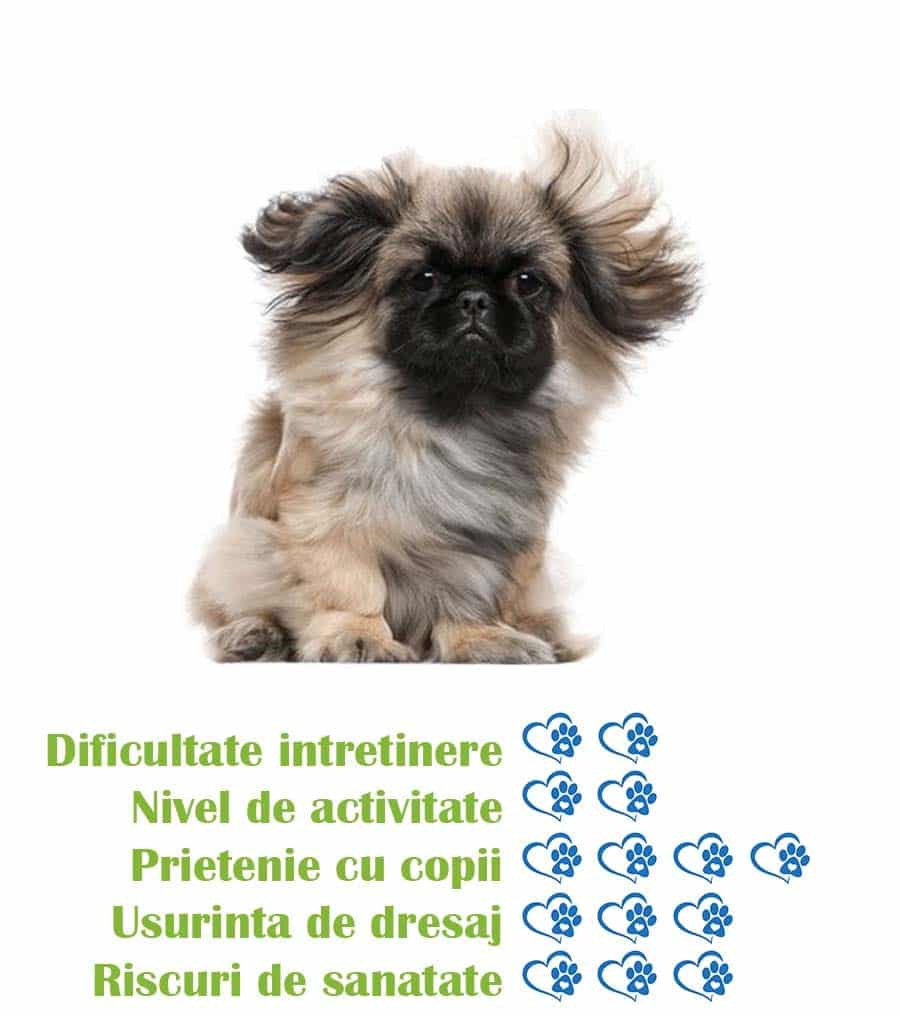
- Easy care: the Imperial Pekingese's coat doesn't need special care, as regular brushing and occasional washing is sufficient.
- Training skills: the Imperial Pekingese is an intelligent and easy to train breed, suitable for those who want a well-mannered companion.
- Ideal for families: the Imperial Pekingese is a loving and friendly breed, suitable for families with children or for those looking for a reliable companion.
Order form
Why people choose BucuriaCasei?
Make enquiries on Own Account
Send request on BucuriaCasei
We are proud and honored to have helped over 3000 dog-loving families in Europe over the past 14 years. And many of them are happy to come back to us, often years later, to give us a snapshot of their happy lives.
🐶 O nouă bucurie a ajuns la familia ei! ❤️
Suntem foarte fericiți să vedem că micuțul nostru Cocker Spaniel este deja atât de iubit și răsfățat în noua lui casă. 🥰
Astfel de mesaje și fotografii ne bucură enorm și ne confirmă că fiecare pui ajunge acolo unde trebuie. 🐾❤️
Mulțumim familiei pentru încredere și pentru că ne-ați trimis această fotografie! 🏡🐶
#cockerlove #cockerspanielcuties #cockerspanielmoments #cockerspaniellovers #cockerspanielofinstagram❤️❤️ recenzie


🐶❤️ Becky – o nou capitol plin de iubire!
Cele mai frumoase confirmări că un puiuț a ajuns în familia potrivită sunt mesajele primite de la noii săi stăpâni. 🥰
„Becky este nemaipomenit de frumoasă, drăguță, deșteaptă și ascultătoare. Este pur și simplu cățelușa perfectă și suntem foarte fericiți cu ea!” ❤️
Iar noi nu putem decât să ne bucurăm când vedem cât de fericită este Becky în noua ei familie. 🐾🌿
Mulțumim pentru încrederea acordată Bucuria Casei și pentru că ne-ați trimis această minunată fotografie! 🤗
Să aveți parte de cât mai multe aventuri împreună, Becky! ❤️🐶
#maltipoo #maltipoodle #maltipoonation #maltipoolife #maltipoolovers reviews
🐶❤️ Un Cockapoo ajuns acasă, exact unde trebuie!
Nimic nu ne bucură mai mult decât mesajele primite după ce puiuții ajung la noile lor familii. 🥹
„E o dulceață… O ador!” — iar pozele spun totul. 🥰
Băiță, prima plimbare și deja o mulțime de iubire. 🐾
Pentru noi, fiecare puiuț înseamnă mai mult decât o vânzare. Înseamnă să găsim familia potrivită și să știm că începe o poveste frumoasă împreună. ❤️
Mulțumim pentru încrederea acordată Bucuria Casei și pentru că ne trimiteți astfel de momente! 🤗
📩 Pentru disponibilitate Cockapoo și alte rase, ne puteți scrie în privat.
#cockapoo #cockapoo_fans #cockapoo_lovers #cockapoopuppy #cockapoolove recenzie
Micul Enzo s-a adaptat perfect în noua lui familie și deja și-a găsit locul preferat… chiar pe cartea stăpânei. 📚😴
Astfel de fotografii sunt cea mai mare bucurie pentru noi. Ne confirmă că puiuții noștri ajung în familii iubitoare, unde sunt răsfățați și iubiți din prima zi.
Îi dorim lui Enzo o viață lungă, sănătoasă și plină de aventuri! ❤️
Mulțumim familiei pentru fotografie și pentru încrederea acordată! 🤗
📩 Dacă și tu îți dorești un companion echilibrat și crescut cu grijă, scrie-ne în privat.
#schnauzer #schnauzerpitic #schnauzerpuppy #schnauzerlife #schnauzerlife recenzie
Ce bucurie să citim un astfel de mesaj! 🥹❤️
Vă mulțumim din suflet pentru încredere și pentru dragostea pe care i-o oferiți lui Cookie. Se vede că este un Pudel fericit și foarte iubit, iar pentru noi nu există o satisfacție mai mare decât să știm că puii noștri ajung în familii atât de frumoase. 🐶🥰
Vă dorim să vă bucurați de Cookie mulți ani înainte, cu multă sănătate, joacă și momente de neuitat! Vă îmbrățișăm cu drag! ❤️🐾
#poodletoy #poodlered #pudel #pudeltoy recenzie
La mulți ani, Charlie! 🥳🎉
Ne bucurăm enorm să vedem cât de frumos a crescut și câtă iubire a adus în familia voastră. ❤️
Vă mulțumim din suflet pentru încrederea acordată și pentru că ne-ați făcut părtași la aceste momente speciale. Vă dorim să aveți parte de mulți ani împreună, plini de sănătate, joacă și amintiri minunate! 🤗🐶
Vă îmbrățișăm cu drag și îi transmitem lui Charlie o porție mare de pupici și mângâieri din partea echipei Bucuria Casei! 🐾❤️
#cavapoo #cavapoopuppy #cavapooworld #cavapoolovers recenzie
🎉 Un an plin de iubire, joacă și momente de neuitat! 🩷🐾
Astăzi sărbătorim primul a din viața acestei fetițe minunate de Yorkshire Terrier, iar noi nu putem fi mai fericiți să vedem cât de iubită și răsfățată este în noua ei familie. 🥹
Mesajele și fotografiile pe care le primim de la familiile puiuților noștri sunt cea mai frumoasă răsplată și ne confirmă că fiecare pui ajunge exact acolo unde îi este locul – într-o casă plină de dragoste. ❤️
Vă mulțumim pentru încrederea acordată și pentru că faceți parte din familia Bucuria Casei! Vă dorim mulți ani fericiți împreună, sănătate și cât mai multe amintiri frumoase! 🐶🎂
La mulți ani, micuțo! 🥳🐾
#yorkshire #yorkshires #yorkshireterrierlove💕 #yorkshirelovers #yorkshirelife recenzie
🐾 Încă o familie fericită și un Goldendoodle adorabil care și-a găsit căminul perfect! ❤️
Acest micuț Goldendoodle a pornit într-o nouă aventură alături de familia sa iubitoare. Cu blănița pufoasă, temperamentul blând și inteligența specifică rasei, suntem convinși că va aduce multe zâmbete și momente speciale în noua lui casă. 🏡
Goldendoodle-ul este una dintre cele mai apreciate rase de familie, fiind afectuos, jucăuș, sociabil cu copiii și foarte ușor de integrat în viața de zi cu zi.
Vă mulțumim pentru încredere și vă dorim ani plini de iubire, joacă și amintiri frumoase împreună! 🤎🐶
#goldendoodle #goldendoodlelove #goldendoodlepuppy #goldendoodlestyle #goldendoodlemoments recenzie
🐻❤️ A little teddy bear with big eyes and an even bigger heart!
This adorable toy poodle is growing up just the way we like to see them: healthy, loved, and extremely well-behaved 🥰
At just 6 months old, he has already become the center of the universe for his new family. We are absolutely thrilled to hear this news and to see how much love these little ones can bring into people’s lives ✨
Thank you for the photos and the kind words!
May you enjoy many happy years together! 🤎🐶
#pudeltoy #poodle #poodletoday #poodleromania #poodle review
A strong, loyal, and incredibly elegant soul 🖤
This gorgeous, pedigreed American Akita has found the perfect family and is setting off on a new adventure with his people 🤍
The American Akita is an impressive breed, known for its intelligence, devotion, and commanding presence. A companion that forms special bonds and always stays close to the family 🐾
We wish them a life filled with love, long walks, and many happy moments together! ✨
#AkitaAmerican #AmericanAkita #PuppyLove #PedigreeDog #akita review
Let the pictures speak for themselves! ☺️
#maltipoo #maltipoonation #maltipoolife #maltipoolovers #maltipoolove reviews
✨ Sirius grows beautifully, step by step ✨
We are back with news from little Sirius, who is already starting to show how smart he is 💛
With almost a pound of energy and personality, he's a real eater, inquisitive and very aware of what's going on around him.
We are very happy to see that he has already learned to sit, wait and eat quietly - a clear sign that he is adapting perfectly and is receiving lots of care and love.
Such updates confirm that every chicken gets exactly where it needs to be:
👉 in a family that raises him beautifully.
#yorkshireterriertoy #yorkshire #yorkshireterrier #yorkshirelovers #yorkshirelife review
✨ Love at first sight ✨
Sometimes you don't need days or weeks...
👉 5 minutes is long enough for a puppy to find its place in your heart. 🐶💛
Little Maltipoo came home full of energy, curious, friendly and ready to make lifelong friends. Just the kind of start that confirms that every puppy gets where it's supposed to go.
For us, such messages mean a lot.
It means the joy is really getting there.
Thank you for your trust and love! 🤍
#maltipoo #maltipoodle #maltipoonation #maltipoolife #maltipoolovers reviews
Reddish Dwarf Pudding - review 1 year.
www.BucuriaCasei.ro
#pudel #pudeltoy #poodle #poodlelover #poodlelife #poodlemix #poodlegram #poodlegram #poodlegram #poodlegram #poodlegram #poodlegram #poodlegram #poodlegram #poodlegram #poodlegram #poodlegram #poodlegram #poodlegram
Toy red Toy poodle with pedigree reviews.
www.BucuriaCasei.ro
#canichetoy #canichetoynegro #canichetoyespaña #canichetoychocolate #pudeltoy #pudeltoyred #poodletoy #poodletoyespaña
🐺✨ Velka at 4 months - a true lupine beauty! ✨🐺
Two months ago, Velka left for her new family, and now we are happy to welcome this wonderful photo as a review. You can clearly see that she has transformed into an elegant, strong and energetic puppy! 💙
Thanks for this update! We love seeing how our pups are growing in their new homes. 📸💕
#LupCehoslovak #ChappyToddler #lupcehoshoslovacromania
Goldendoodle female review.
www.BucuriaCasei.ro
#goldendoodle #goldendoodlepuppy #goldendoodlelecentral #goldendoodlelove #goldendoodlelife #goldendoodlepuppies
Bichon Bolognese review.
www.BucuriaCasei.ro
#bichonbolognese #bichonbolognese #bichonbolognesenesedog #bichonbolognesepuppy #bichonbologneseofinstagram
Maltipoo male reviews.
www.BucuriaCasei.ro
#maltipoo #maltipoodle #maltipoopuppy #maltipoolove #maltipoonation #maltipoolovers #maltipoocorner #maltipoolife #maltipoosociety #maltipooofinstagram
Chihuahua male reviews.
www.BucuriaCasei.ro
#chihuahua #chihuahuas #chihuahualhuhuualove #chihuahualife #chihuahuafanatics #chihuahualovers #chihuahuaworld
Bull Terrier review.
www.BucuriaCasei.ro
#bullterrier #bullterriers #bullterriersofinstagram #bullterrierlovers #bullterrierlover #bullterrierclub #bullterrierdog #bullterrierdogs #bullterrierworld
Maltipoo male reviews.
www.BucuriaCasei.ro
#maltipoo #maltipoodle #maltipoopuppy #maltipoolove #maltipoonation #maltipoolovers #maltipoocorner #maltipoolife #maltipoopuppies #maltipooofinstagram
White Pomeranian review.
www.BucuriaCasei.ro
#pomeranian #pomeranians #pomeranianpuppy #pomeranianworld #pomeranianlife #pomeranianlove #pomeranianlovers #pomeraniandogs
White Pomeranian review.
www.BucuriaCasei.ro
#pomeranian #pomeranians #pomeranianpuppy #pomeranianworld #pomeranianlife #pomeranianlove #pomeranianlovers
Golden Retriever male review.
www.BucuriaCasei.ro
#goldenretriever #goldenretrieversofinstagram #goldenretrieverpuppy #goldenretrievers #goldenretrieverlovers #goldenretrieverlove #goldenretrievertoday
What else you should know:
Contractual information is available in the terms and conditions of use and can be consulted when submitting your order.
We do not perform or in any way support ear or tail docking practices. We respect our commitment to animal welfare and promote the breeding and care of animals in accordance with animal welfare rules and legislation.
You can choose this preference on the order form in the Vaccination section, where you will find the option "Export Ready". To travel to the European Union, pets need a passport. This can be issued by your veterinarian from the age of 3 months, once the rabies vaccination has been carried out. If you choose delivery to a country other than Romania, the puppy will be shipped after 3 months and 3 weeks of age, at which point it will be vaccinated against rabies, microchipped and will have an international passport.
If you would like your puppy to be accompanied by a Pedigree certificate, please select the appropriate option when placing your order. This document certifies the pedigree of the dog and the authenticity of the breed, and is issued by specialized organizations. We recommend that you consider this option if you want to participate in dog shows or have the guarantee of a pure genetic line.
Transportation in Romania
Puppies can be transported to the client's city, depending on the availability of our routes. If delivery cannot be made to a specific city, this will be communicated in advance to find an optimal solution for the puppy's delivery.
Currently, direct delivery to the customer's address is not possible.
International transport
If you opt for delivery outside Romania, the puppy can only be shipped after the age of 3 months and 3 weeks, at which time it will be vaccinated against rabies, microchipped and will have an international passport. Be sure to choose the Ready for Export option in the Vaccination section when submitting your order.
If transportation cannot be made to the customer's city, this will be communicated in advance in order to identify a convenient delivery solution.
We do not currently offer transportation to the exact address of the customer.
Countries and cities served
Transportation is currently available to the following international destinations:
- Hungary: Budapest, Gyor
- Austria: Vienna, Linz
- BelgiumBrussels
- Czech Republic
- Denmark
- Switzerland
- Germany: Passau, München, Nürnberg, Stuttgart, Frankfurt, Köln
- Italy: Padua, Verona, Milan, Bologna, Florence, Rome
- Moldova: Chisinau
- Netherlands: Eindhoven, Breda
If you have questions about transportation or other destinations, please contact us for more information.
We deliver our puppies as soon as possible, but never before the minimum age of 8 weeks, which may vary by breed. Although we want to get your puppy to you as soon as possible, it is essential to respect this interval, both for the puppy's sake and for your own comfort. Premature separation can make care and adaptation considerably more difficult or even jeopardize the puppy's health.
The estimated time to delivery, shown on each breed's page, may be influenced by your preference of sex, size, color or vaccination schedule. For this reason, please take it as a guide. During the selection process, we will keep you up to date with updated information.
For pedigree puppies, identification and verification may take up to 3 months, depending on national availability at the time of order. If you decline a proposal on a puppy, the order remains active and the identification process continues and we will come back with alternatives. In this situation, the delivery time will be extended by the estimated period specified on the page of the breed ordered.
Internal deworming is an essential process in the first months of a puppy's life and is rigorously carried out before each vaccination to eliminate intestinal parasites and pathogens such as Giardia. This can be carried out either by the veterinarian or the breeder, depending on the situation.
We recommend that both internal and external de-worming be carried out within the first week of your puppy's arrival to ensure complete parasite elimination and proper preparation for the next vaccine according to the vaccination schedule. External deworming is indicated immediately after the first bath, followed by a period of 24 hours during which direct contact with the treated area should be avoided.
We are glad to see that you are thinking about training, as it is very important. Puppies are not generally trained before leaving, it is up to the breeder what education they choose to provide the puppy.
However, if you want specific training, this can be done after 4-5 months of age.
All puppies need proper training from their owner upon arrival. If you don't want to hire a trainer, there are several resources that can be found online to help you.
Puppy health is our top priority! We inspect puppies at the owner's location from the time of booking to the time of delivery to ensure they are healthy, happy and well cared for. Once you choose your puppy, we will make sure it is properly vaccinated and shows optimal clinical signs to be transported safely. At the same time, you will benefit from a medical guarantee for viral diseases for which vaccination has been carried out (Parvovirus, Jigodie, Hepatitis, Hepatitis, Leptospirosis or Rabies) for a period of 5 days so that you have enough time to confirm the puppy's good health. For added safety, it is recommended that when placing your order you choose a puppy with multiple vaccinations, as this will give your puppy immunity so that it will not become ill from viruses or bacteria in the external environment.
All our puppies receive the necessary vaccinations and internal deworming according to their age, performed by the breeder or veterinarian.
Of course, we microchip all puppies if this has not been done by the breeder, and the microchip code will always be pasted into their health card. Registration in RECS will be completed as soon as you send us a copy of your ID.
This is possible. The identification and verification steps will be carried out by BucuriaCasei, you will indicate the desired specimen from the photos that will be sent to you so that the veterinarian can properly vaccinate the puppy, and then you will be sent the location so that you can personally pick up the chosen puppy.
You can cancel your order at any time by communicating your intention on WhatsApp, by phone or by email. The identification and verification procedures we carry out for each order involve proportionate costs, which is why the amount of the advance payment paid is non-refundable, except in the following situations:
- the order is less than 7 days old;
- the order exceeded by more than 30 days the estimate on the ordered breed page (for dogs without pedigree) or the deadline agreed upon order;
- the order has exceeded by more than 30 days the 6 months term (for pedigree dogs) or the term agreed at the time of order.
Also, even if you fall into one of the points mentioned above, the refund will not be made in the following situations:
- you have already chosen a puppy that I have reserved for you;
- you have refused a specimen that was proposed to you, which is why the order fulfillment deadline is extended by the delivery estimate displayed on the ordered breed page.
If you are eligible for a refund of the advance, 20 lei will be deducted from the refunded amount, related to bank fees. It will be paid into the same bank account from which the payment was made, within a maximum of 14 days.
Submitting an order represents a commitment assumed by both parties.
The price consists of the advance payment of 10% which is paid at the time of sending the order and an estimate to be paid upon delivery. In our activity of identifying and verifying the puppies available in the country we will obtain results and photos that we will send you, accompanied by the price difference that you will pay upon receipt. In case the price sent is higher than the estimated one on the site and it does not represent any obligation to accept the offer, we will continue the checks at other breeders. Although we make efforts to regularly update the prices displayed on the site, they should be treated as information.
Didn't find the information you were looking for? Contact us.
Breed description
The benefits of an Imperial Pekingese in a child's life
- friendship, compassion, respect, responsibility;
- have a higher level of self-confidence;
- have better cognitive development;
- are less prone to allergies or asthma;
- strengthening and faster maturation of the immune system;
- the ability to manage emotions;
- the ability to relate effectively with others;
- with 30% less likely to develop allergic rhinitis;
- with 30% less likely to develop infectious respiratory diseases;
- with 50% less risk of developing ear infections;
- with 66% less chance of later developing allergies to animal hair;
- therapeutic effects in the case of physical and mental disorders such as autism, depression, motor, sensory or intellectual disabilities.
The benefits of an Imperial Pekingese in family life
- the stress level decreases and a sense of well-being sets in after at least 15 minutes of looking at or interacting with the dog;
- dog owners have better physical condition, being more active people,
they are friendlier, relate better to others, are more empathetic and more self-confident; - contributes to improving sleep quality, preventing cardiovascular problems, lowering blood pressure, maintaining cholesterol and triglyceride levels within normal limits;
- during interaction with the dog, the level of oxytocin increases, a hormone associated with attachment that plays a role in consolidating the feeling of love and strengthening the attachment relationship;
- Overall, people who live around dogs are happier and their quality of life increases in many ways.
Pekingese for sale: breed
No wonder the Pekingese has a self-important attitude, given his history as an imperial favorite. He was held in high esteem at China's imperial court. A Pekingese will greet you with dignity and pride. He is well aware that his ancestors were the companions of royalty and continues to demand the respect that this position commands today. With his round, brown eyes and long straight tail and tail carried on his back, he goes through life with a true realization of who he is and the importance he has to the people who live with him.
The Pekingese is highly intelligent, but this intelligence is offset by an independent mind and a wide range of stubbornness. His training is challenging. He considers himself in charge of every situation, so you have to convince him that you are in charge and that doing what you want is to his advantage. The Pekingese does not respond well to harsh training or discipline and this can cause him to become defensive and bite.
The Pekingese is very loving and affectionate with the family, but aloof, almost cautious, of strangers. This characteristic makes it an excellent watchdog; it likes to bark when strangers approach. Some Pekingese tend to bark too much, so it's good to teach them in advance when to stop. They are brave, sometimes to the point of being crazy, and will defend you to the death if need be.
While children are always intrigued by small dogs, a Pekingese is not a good choice for families with young children, who might treat it roughly. The Pekingese will not tolerate being grabbed and will not hesitate to defend itself. Always supervise any interaction between a Pekingese and a child of any age.
Pekingese don't always get along with other dogs. They prefer the company of other Pekingese and can take a long time to get used to other animals in the household. With proper socialization, early exposure to many different people, other animals, sights, sounds and experiences, however, they can become best friends with other dogs and cats and include them in their royal group. However, until you're sure everyone gets along, actively supervise them. Round, bulging eyes are easily injured.
The dog's long, flowing coat needs daily maintenance. If you're looking for a devoted and loving friend who will treat you with respect and dignity and who expects the same treatment from you, then a Pekingese may be a breed to consider. It needs someone who understands their unique needs and is willing to make room for a truly individual personality in their life. The Pekingese will return your care with all the love and affection that a truly big heart in a small body can provide.
Pekingese for sale: brief history
According to Chinese legend, a lion once fell in love with a marmoset, a type of monkey. To unite their love, the lion asked Buddha to reduce him in size, but let him keep his heart and character. Buddha agreed, and the union of the two resulted in Fu Lin's dogs, the lion dogs of China.
This may not exactly how the Pekingese came about, but it's a good story. The breed is indeed ancient, with DNA evidence confirming it as one of the oldest of dog breeds. It is believed to have existed in China as far back as 2,000 years ago. Named after the capital city of Peking (now Beijing), they were the companions of nobles, princes and members of the imperial family.
The Pekingese was closely guarded and was never allowed to leave the palace, let alone the country, but came to the attention of the Western world following the First Opium War in 1860. When British troops entered the imperial palace after invading Peking, one of their discoveries were five Pekingese dogs guarding the body of their mistress, who had committed suicide rather than be captured. The dogs became prizes of war and were taken to England where two were presented to the Duchess of Wellington, two to the Duke and Duchess of Richmond and Gordon, and one to Queen Victoria, who presented her dog 'Looty'.
They remained rare, although by the 1890s, several Pekingese were smuggled from China. A dog named Pekin Peter was the first Pekingese to be shown at a British dog show in 1894. The breed at that time was known variously as the Chinese Pug and Pekingese Spaniel. In 1904 a Pekingese club was established.
Of course, the popularity of Pekingese spread across the Atlantic to the United States. The first Pekingese registered by the American Kennel Club was Rascal in 1906, and the Pekingese Club of America was formed in 1909. Today, the breed ranks 49th among 155 AKC-registered breeds and varieties.
Pekingese for sale: size
The Peking Pekingese is heavy for its size, with a muscular body. It stands between 15 and 24 cm tall and weighs between 3 and 6 kilograms. In imperial China, a Pekingese weighing less than 3 kilograms was called a 'sleeve dog' and rode in the sleeve cuffs of the clothes worn by members of the imperial court.
Pekingese for sale: personality
He may look unflattering, but the Pekingese is a stand-up character who is tougher and braver than his looks suggest. Regal dignity, self-importance, confidence and stubborn hiss come together in a lively, affectionate, good-natured dog that will respect you if you respect him. He is loyal and protective of his people, barking when strangers appear. Train him with firm and kind consistency, using positive reinforcement such as food rewards and praise. You will always succeed if you can convince him that doing something is his idea, not yours.
Temperament is affected by a number of factors, including heredity, training, and socialization. Puppies with nice temperaments are curious and playful, willing to approach people and be held by them.
Like any dog, the Pekingese needs early socialization - exposure to many different people, sights, sounds and experiences - when they are young. Socialization helps ensure that your pup grows up to be a well-rounded dog. Enrolling in puppy daycare is a great start. Inviting visitors regularly and taking him to busy parks, stores that allow dogs and on leisurely walks to meet neighbors will also help him polish his social skills.
Pekingese for sale: health
Pekingese are generally healthy, but like all breeds, they are prone to certain health conditions. Not all dogs will have any of these diseases, but it's important to be aware of them if you're considering this breed.
If you buy a puppy, find a good breeder who will show you the health papers of the puppy's parents. Health certificates show that a dog has been tested and recovered from a particular ailment.
- Patellar luxation: This is a common problem in small dogs that occurs when the patella, which has three parts – the femur (thigh bone), kneecap and tibia, is not aligned properly. This causes a limp or abnormal gait. It is a condition that is present at birth, although the actual dislocation does not always appear until much later. The friction caused by patellar luxation can lead to arthritis, a degenerative joint disease. There are four degrees of patellar luxation, ranging from grade I, an occasional dislocation that causes temporary dislocation of the joint, to grade IV, in which the tibia is severely out of place and the patella cannot be manually realigned. Severe degrees of patellar luxation may require surgery.
- Brachycephalic syndrome: The full name of the condition is brachycephalic airway obstruction syndrome (BAOS). This condition occurs in those breeds that have been selectively bred to have a shortened face. These dogs have some problems with breathing from the moment they are born. The exaggerated features that occur with their anatomy include an elongated and fleshy soft palate, narrowed nostrils, laryngeal changes and a relatively small windpipe. Problems vary depending on the severity of the disease. Some have no other problems; others have increasingly noisy breathing, coughing, stuttering, fainting and fainting spells, and have a decreased exercise tolerance. Overheating is particularly dangerous for these breeds because it causes further swelling and narrowing of the airways, increasing the dogs' anxiety. Treatment may include preventing the dog from being overweight, corticosteroids for short-term relief of airway inflammation and surgical shortening of the soft palate if it is elongated.
- Cataract: A cataract is a clouding on the lens of the eye that causes difficulty seeing. The dog's eyes may have a cloudy appearance. Cataracts usually occur in old age and can sometimes be surgically removed to improve your pet's vision.
- Cleft palate: The palate is the roof of the mouth and separates the nasal and oral cavities. It consists of two parts, hard and soft. A cleft palate has a slit that runs bilaterally or unilaterally and can vary in size from a small hole to a large slit. Young may be born with cleft palates or as a result of injury. Cleft palates are quite common in dogs, but many puppies born with a cleft palate do not survive or are euthanized by the breeder. The only treatment is surgery to close the hole, although not all dogs with a cleft palate require surgery. It is important to get the diagnosis and treatment from your veterinarian.
- Cryptorchidism: Cryptorchidism is a condition in which one or both testicles fail to descend and is common in small dogs. The testicles should descend completely by the time the puppy is 2 months old. If one testicle is retained, it is usually non-functioning and can become cancerous if not removed.
- Dystichiosis: This condition occurs when an extra row of eyelashes (known as distichia) grows on the oil gland in the dog's eye and protrudes along the edge of the eyelid. This irritates the eye. Distichia is treated surgically by freezing the excess eyelashes with liquid nitrogen and then removing them. This type of surgery is called cryoepilation and is done under general anesthesia.
- Ectopic cilia: An abnormality of gene growth in which extra genes grow through the eyelid inward. One or more ectopic cilia may be present. Clinical signs of discomfort vary depending on the number of abnormal eyelashes and whether they are fine or thick. This type of eyelash abnormality is particularly irritating to the eye and is more likely to cause corneal ulceration. Treatment consists of treating any corneal ulcers that have developed with antibiotics and surgical removal.
- Entropion: This defect, which is usually evident by six months of age, causes the eyelid to roll inward, irritating or injuring the eyeball. One or both eyes may be affected. If your Pekingese has entropion, you may notice him rubbing his eyes. The condition can be surgically corrected.
- F fold dermatitis: is a skin infection caused by folds of skin where friction or dampness occurs. It is more commonly found in breeds that have folds in the skin, such as Pekingese. The signs of fold dermatitis are redness, sores and unpleasant odor, and the dog can be affected on the tail, face, lips, vulvar folds and any other fold of the body. Treatment for fold dermatitis varies depending on the affected area, but may include surgical removal of the folds or tail amputation in the case of tail dermatitis. It may also include topical antibiotic ointments. The best treatment is to properly maintain your dog's coat to prevent the condition.
- Hydrocephalus: occurs when cerebrospinal fluid in the brain accumulates due to a congenital defect, obstruction or as a result of perinatal trauma, putting pressure on the brain. This usually occurs in young dogs under 18 months of age and older dogs that are over 6 years of age. If hydrocephalus is left untreated, the dog will die. Treatment consists of surgery to either remove the obstruction or insert a shunt.
- Keratoconjunctivitis Sicca: Keratoconjunctivitis Sicca is caused when the eyes do not produce enough tears to stay moist. Your veterinarian may perform a Schirmer test to diagnose dry eye, which can be controlled with medications and special care. This eye condition requires lifelong therapy and care.
- Mitral valve disease: This defect of the heart's mitral valve causes a backup of blood in the left atrium, known as mitral regurgitation. This makes the heart less efficient at pumping blood. It is the most common acquired heart disease, affecting more than a third of dogs over ten years of age. There are several breeds that are genetically predisposed to acquire the condition at a much younger age, and the Pekingese is one of them.
- Progressive Retinal Atrophy (PRA): This is a degenerative eye condition that eventually causes blindness due to the loss of photoreceptors in the back of the eye. PRA is detectable years before the dog shows signs of blindness. Fortunately, dogs can use their other senses to compensate for blindness, and a blind dog can live a full and happy life.
- Exposure keratopathy syndrome: This syndrome can be caused by a number of factors, such as exophthalmos, which is a protrusion of the eyeball, macroblepharon, which is a large opening of the eyelids and lagophthalmos, which is an inability to completely close the eyelid. These factors cause the cornea to become exposed, which leads to an inability to blink properly and mild evaporation of tears. The syndrome can lead to corneal ulceration and pigmentation of the cornea which can lead to impaired vision. Signs are generally red eyes, increased tearing. Treatment for exposure keratopathy syndrome is usually various surgical interventions.
- Intervertebral disc disease (IDD): IDD occurs when a disc in the spine ruptures or herniates and pushes up into the spinal cord. When the disk pushes into the spinal cord, nerve transmissions are prevented from traveling along the spinal cord. Intervertebral disk disease can be caused by trauma, age or simply from the physical jolt that occurs when a dog jumps off a couch. When the disc ruptures, the dog usually feels pain, and the ruptured disc can lead to weakness and temporary or permanent paralysis. Treatment usually involves nonsteroidal anti-inflammatory drugs (NSAIDs) made specifically for dogs. Never give your dog Tylenol or other NSAIDs made for humans, as they can be toxic. In some cases, surgery may be helpful, but must be done within a day or so of an accident. You may also want to ask your veterinarian about physical rehabilitation. Treatments such as massage, treadmills and electrical stimulation are available for dogs and can have excellent success.
Pekingese for sale: care
Pekingese are good house dogs and will, of course, be just as happy in a mansion. They love to run around, but need a fenced area as they will explore and might get lost. These dogs appreciate walks and will make excellent companions. They will run around the house, especially with another Pekingese or another dog. Their short noses make them sensitive to heat, so they should live in an air-conditioned environment.
Pekingese are stubborn and can be difficult to train. They will not respond at all to correction or harsh training methods. Reward them every time they do something you like and be creative to convince them that what you want them to do is their idea.
Pekingese for sale: feeding
Recommended daily amount: 1/2 to 1 cup of high-quality dry food per day, divided into two meals. Note: How much your adult dog eats depends on size, age, build, metabolism and activity level. Dogs are individuals, just like humans, and not all dogs need the same amount of food. It almost goes without saying that an extremely active dog will need more food compared to a less active one. The quality of the dog food you buy also makes a difference - the better the food, the more nutrients and satiety it will provide, without you having to constantly check the bowl.
Pekingese for sale: coat color and brushing
The Pekinese wears a long, thick, straight coat that stands away from the body like a halo. Under the top layer is a thick, soft coat. The Pekingese is true to its lion dog description. The coat may be any color or may have markings, including black and tan, black or brindle red, and particolor, which is white with another color. It may or may not have a black mask. The solid white Pekingese was highly prized by the Chinese and is still popular today. Regardless of coat color, the exposed skin of the muzzle, nose, lips and eyes is black.
Pekingese are fairly easy to care for and only need an occasional brushing to keep their fur healthy. Start grooming your dog from an early age and teach him to sit on a table or floor to make the experience easier for both of you. When caring for your pet at any stage of life, take the time to check for scabs, skin lesions, spots, rough, black skin or signs of infection. You should also check the ears, eyes and teeth for any problems or bad smells. Both are signs that your pug may need to see your vet.
Clean their ears regularly with a warm, damp cloth and run a cotton swab around the edge of the canal. Never stick the cotton swab into the actual ear canal. If the edges of the ears are dry, apply mineral or baby oil. The oil can also be used on a dry nose.
Dogs do not naturally wear their nails and will need them trimmed regularly. This prevents splitting and tearing, which can be painful for the dog.
Keep facial wrinkles clean and dry to prevent bacterial infections. Whenever you bathe your dog, thoroughly dry the skin between the folds. A monthly bath is required and use a high-quality dog shampoo to keep the natural oils in his skin and coat.
Pekingese should be easy to care for, and with proper training and positive childhood experiences, grooming can be a wonderful bonding time for you and your dog.
Pekingese for sale: relationship with children and other animals
A Pekingese is not a good choice for families with children who may treat it inappropriately. The Pekingese will not tolerate being grabbed or squeezed and will not hesitate to defend itself.
As with every breed, however, you need to teach children how to approach and touch dogs and always supervise any interaction between them to prevent any biting. Teach your child never to approach the dog while eating or sleeping or to try to take the dog's food. No dog, however friendly, should be left unattended with a child.
Pekingese prefer the company of other Pekingese, but through early socialization they can learn to get along with other dogs (and cats).