Saint Bernard for sale
4.100,00 Lei
Recently sold puppies
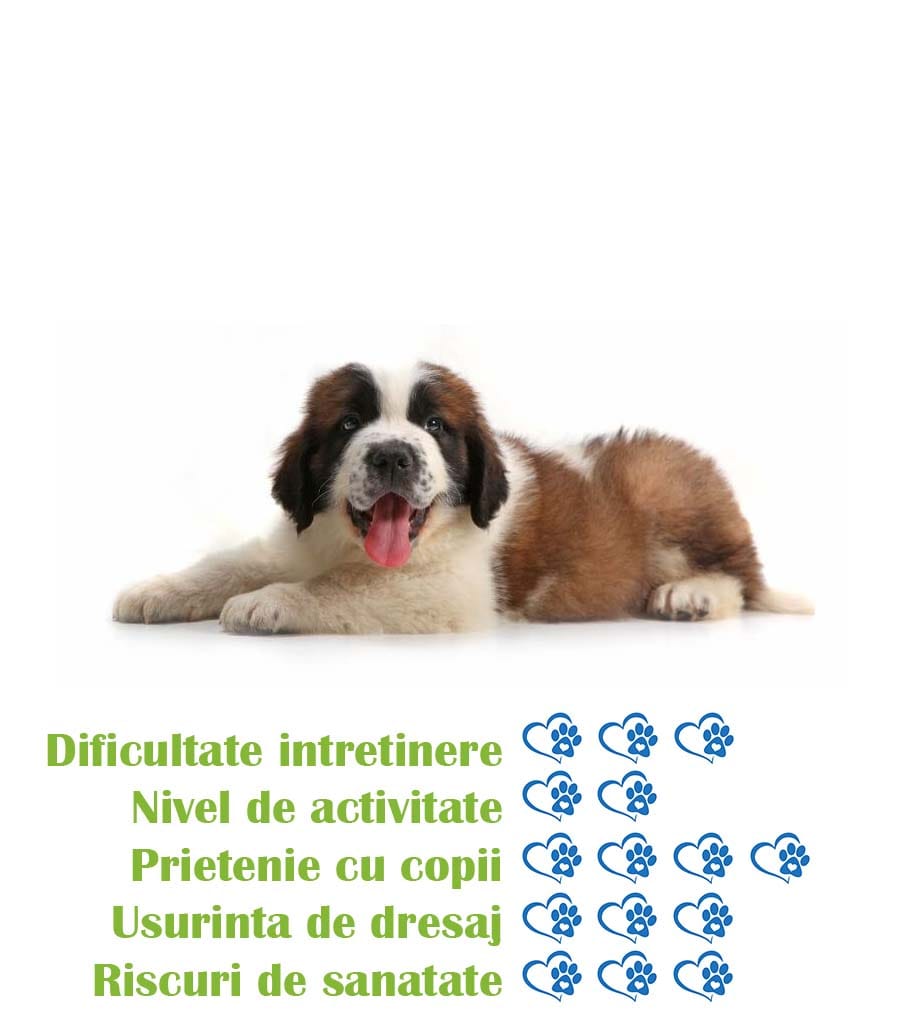
Female Saint Bernard.
www.BucuriaCasei.ro
#saintbernard #saintbernards #saintbernardsofinstagram #saintbernardpuppy #saintbernardsofig


Are you looking for a dog of the breed? Saint Bernard for sale?
- From BucuriaCasei you can buy a Saint Bernard chicken healthy, vaccinated and vet-checked to ensure you get a quality pet.
- We strive to offer only the best specimens selected from responsible breeders, carefully crossed to ensure good temperament and health.
- We offer assistance and advice to help you choose the right breed for your family's needs and lifestyle.
Undecided? Here are 5 reasons why you should buy a Saint Bernard from BucuriaCasei:
- Large size: the Saint Bernard is a large breed, an imposing and impressive companion.
- Loving personality: The Saint Bernard is a loving and protective breed that is very attached to its family.
- Ideal for families: the Saint Bernard is a suitable breed for families with children, being playful and loving with all family members.
- Search and rescue skills: the Saint Bernard was developed to search and rescue people lost in the mountains, making it an excellent companion for those who love outdoor activities.
- Easy care: The Saint Bernard has a thick, open coat that doesn't need special grooming, as regular brushing is sufficient.
Order form
Essential products for your puppy




Why people choose BucuriaCasei?
Make enquiries on Own Account
Send request on BucuriaCasei
We are proud and honored to have helped over 3000 dog-loving families in Europe over the past 14 years. And many of them are happy to come back to us, often years later, to give us a snapshot of their happy lives.
Let the pictures speak for themselves! ☺️
#maltipoo #maltipoonation #maltipoolife #maltipoolovers #maltipoolove reviews
✨ Sirius grows beautifully, step by step ✨
We are back with news from little Sirius, who is already starting to show how smart he is 💛
With almost a pound of energy and personality, he's a real eater, inquisitive and very aware of what's going on around him.
We are very happy to see that he has already learned to sit, wait and eat quietly - a clear sign that he is adapting perfectly and is receiving lots of care and love.
Such updates confirm that every chicken gets exactly where it needs to be:
👉 in a family that raises him beautifully.
#yorkshireterriertoy #yorkshire #yorkshireterrier #yorkshirelovers #yorkshirelife review
✨ Love at first sight ✨
Sometimes you don't need days or weeks...
👉 5 minutes is long enough for a puppy to find its place in your heart. 🐶💛
Little Maltipoo came home full of energy, curious, friendly and ready to make lifelong friends. Just the kind of start that confirms that every puppy gets where it's supposed to go.
For us, such messages mean a lot.
It means the joy is really getting there.
Thank you for your trust and love! 🤍
#maltipoo #maltipoodle #maltipoonation #maltipoolife #maltipoolovers reviews
Reddish Dwarf Pudding - review 1 year.
www.BucuriaCasei.ro
#pudel #pudeltoy #poodle #poodlelover #poodlelife #poodlemix #poodlegram #poodlegram #poodlegram #poodlegram #poodlegram #poodlegram #poodlegram #poodlegram #poodlegram #poodlegram #poodlegram #poodlegram #poodlegram
Toy red Toy poodle with pedigree reviews.
www.BucuriaCasei.ro
#canichetoy #canichetoynegro #canichetoyespaña #canichetoychocolate #pudeltoy #pudeltoyred #poodletoy #poodletoyespaña
🐺✨ Velka at 4 months - a true lupine beauty! ✨🐺
Two months ago, Velka left for her new family, and now we are happy to welcome this wonderful photo as a review. You can clearly see that she has transformed into an elegant, strong and energetic puppy! 💙
Thanks for this update! We love seeing how our pups are growing in their new homes. 📸💕
#LupCehoslovak #ChappyToddler #lupcehoshoslovacromania
Goldendoodle female review.
www.BucuriaCasei.ro
#goldendoodle #goldendoodlepuppy #goldendoodlelecentral #goldendoodlelove #goldendoodlelife #goldendoodlepuppies
Bichon Bolognese review.
www.BucuriaCasei.ro
#bichonbolognese #bichonbolognese #bichonbolognesenesedog #bichonbolognesepuppy #bichonbologneseofinstagram
Maltipoo male reviews.
www.BucuriaCasei.ro
#maltipoo #maltipoodle #maltipoopuppy #maltipoolove #maltipoonation #maltipoolovers #maltipoocorner #maltipoolife #maltipoosociety #maltipooofinstagram
Chihuahua male reviews.
www.BucuriaCasei.ro
#chihuahua #chihuahuas #chihuahualhuhuualove #chihuahualife #chihuahuafanatics #chihuahualovers #chihuahuaworld
Bull Terrier review.
www.BucuriaCasei.ro
#bullterrier #bullterriers #bullterriersofinstagram #bullterrierlovers #bullterrierlover #bullterrierclub #bullterrierdog #bullterrierdogs #bullterrierworld
Maltipoo male reviews.
www.BucuriaCasei.ro
#maltipoo #maltipoodle #maltipoopuppy #maltipoolove #maltipoonation #maltipoolovers #maltipoocorner #maltipoolife #maltipoopuppies #maltipooofinstagram
White Pomeranian review.
www.BucuriaCasei.ro
#pomeranian #pomeranians #pomeranianpuppy #pomeranianworld #pomeranianlife #pomeranianlove #pomeranianlovers #pomeraniandogs
White Pomeranian review.
www.BucuriaCasei.ro
#pomeranian #pomeranians #pomeranianpuppy #pomeranianworld #pomeranianlife #pomeranianlove #pomeranianlovers
Golden Retriever male review.
www.BucuriaCasei.ro
#goldenretriever #goldenretrieversofinstagram #goldenretrieverpuppy #goldenretrievers #goldenretrieverlovers #goldenretrieverlove #goldenretrievertoday
Cocker Spaniel male review.
www.BucuriaCasei.ro
#cockerspaniel #cocker #cockerspanielsofinstagram #cockerdream #cockerspanielworld #cockers #cockerspanielpuppy #cockerspaniels
Cavapoo F1B male review.
www.BucuriaCasei.ro
#cavapoo #cavapooopuppy #cavapooworld #cavapoochon #cavapoofeature #cavapoof1b #cavapoolife #cavapoodaily #cavapoochonsofinstagram
Yorkshire Terrier female review.
www.BucuriaCasei.ro
#yorkshire #yorkshireterrier #yorkshireterriers #yorkshiredales #yorkshirebrasil #yorkshireterrier #yorkshireterriers #yorkshireterriersofinstagram
Maltipoo toy female review.
www.BucuriaCasei.ro
#maltipoo #maltipoodle #maltipoopuppy #maltipoolove #maltipoonation #maltipoolovers #maltipoocorner #maltipoosociety #maltipooofinstagram
Yorkshire Terrier male review.
www.BucuriaCasei.ro
#yorkshireterrier #yorkshire_terrier #yorkshire #yorkshireterriers #yorkshiredales #yorkshirebrasil #yorkshireyorkshireyorkshire #yorkshirelife
Weimaraner female review.
www.BucuriaCasei.ro
#weimaraner #weimaraners #weimaraner_feature #weimaranerpuppy #weimaranerlove #weimaranerlife #weimaranerworld
Apricot miniature poodle Ollie review.
www.BucuriaCasei.ro
#poodle #pudeltoy #poodle #poodlelove #poodlepuppy #poodlegram
Black toy poodle review.
www.BucuriaCasei.ro
#poodletoy #poodletoday #poodletoys #pudeltoy #pudeltoyred
Goldendoodle male review.
www.BucuriaCasei.ro
#goldendoodle #goldendoodlef1b #goldendoodlesofinstagram #goldendoodlepuppy #goldendoodlecentral #goldendoodlelove
Yorkshire Terrier toy review.
www.BucuriaCasei.ro
#yorkshire #yorkshireterrier #yorkshire_terrier #yorkshireterriers #yorkshiredales #yorkshirebrasil #yorkshireterriersofinstagram #yorkshirepudding #yorkshirestagram
What else you should know:
Contractual information is available in the terms and conditions of use and can be consulted when submitting your order.
We do not perform or in any way support ear or tail docking practices. We respect our commitment to animal welfare and promote the breeding and care of animals in accordance with animal welfare rules and legislation.
You can choose this preference on the order form in the Vaccination section, where you will find the option "Export Ready". To travel to the European Union, pets need a passport. This can be issued by your veterinarian from the age of 3 months, once the rabies vaccination has been carried out. If you choose delivery to a country other than Romania, the puppy will be shipped after 3 months and 3 weeks of age, at which point it will be vaccinated against rabies, microchipped and will have an international passport.
If you would like your puppy to be accompanied by a Pedigree certificate, please select the appropriate option when placing your order. This document certifies the pedigree of the dog and the authenticity of the breed, and is issued by specialized organizations. We recommend that you consider this option if you want to participate in dog shows or have the guarantee of a pure genetic line.
Transportation in Romania
Puppies can be transported to the client's city, depending on the availability of our routes. If delivery cannot be made to a specific city, this will be communicated in advance to find an optimal solution for the puppy's delivery.
Currently, direct delivery to the customer's address is not possible.
International transport
If you opt for delivery outside Romania, the puppy can only be shipped after the age of 3 months and 3 weeks, at which time it will be vaccinated against rabies, microchipped and will have an international passport. Be sure to choose the Ready for Export option in the Vaccination section when submitting your order.
If transportation cannot be made to the customer's city, this will be communicated in advance in order to identify a convenient delivery solution.
We do not currently offer transportation to the exact address of the customer.
Countries and cities served
Transportation is currently available to the following international destinations:
- Hungary: Budapest, Gyor
- Austria: Vienna, Linz
- BelgiumBrussels
- Czech Republic
- Denmark
- Switzerland
- Germany: Passau, München, Nürnberg, Stuttgart, Frankfurt, Köln
- Italy: Padua, Verona, Milan, Bologna, Florence, Rome
- Moldova: Chisinau
- Netherlands: Eindhoven, Breda
If you have questions about transportation or other destinations, please contact us for more information.
We deliver our puppies as soon as possible, but never before the minimum age of 8 weeks, which may vary by breed. Although we want to get your puppy to you as soon as possible, it is essential to respect this interval, both for the puppy's sake and for your own comfort. Premature separation can make care and adaptation considerably more difficult or even jeopardize the puppy's health.
The estimated time to delivery, shown on each breed's page, may be influenced by your preference of sex, size, color or vaccination schedule. For this reason, please take it as a guide. During the selection process, we will keep you up to date with updated information.
For pedigree puppies, identification and verification may take up to 3 months, depending on national availability at the time of order. If you decline a proposal on a puppy, the order remains active and the identification process continues and we will come back with alternatives. In this situation, the delivery time will be extended by the estimated period specified on the page of the breed ordered.
Internal deworming is an essential process in the first months of a puppy's life and is rigorously carried out before each vaccination to eliminate intestinal parasites and pathogens such as Giardia. This can be carried out either by the veterinarian or the breeder, depending on the situation.
We recommend that both internal and external de-worming be carried out within the first week of your puppy's arrival to ensure complete parasite elimination and proper preparation for the next vaccine according to the vaccination schedule. External deworming is indicated immediately after the first bath, followed by a period of 24 hours during which direct contact with the treated area should be avoided.
We are glad to see that you are thinking about training, as it is very important. Puppies are not generally trained before leaving, it is up to the breeder what education they choose to provide the puppy.
However, if you want specific training, this can be done after 4-5 months of age.
All puppies need proper training from their owner upon arrival. If you don't want to hire a trainer, there are several resources that can be found online to help you.
Puppy health is our top priority! We inspect puppies at the owner's location from the time of booking to the time of delivery to ensure they are healthy, happy and well cared for. Once you choose your puppy, we will make sure it is properly vaccinated and shows optimal clinical signs to be transported safely. At the same time, you will benefit from a medical guarantee for viral diseases for which vaccination has been carried out (Parvovirus, Jigodie, Hepatitis, Hepatitis, Leptospirosis or Rabies) for a period of 5 days so that you have enough time to confirm the puppy's good health. For added safety, it is recommended that when placing your order you choose a puppy with multiple vaccinations, as this will give your puppy immunity so that it will not become ill from viruses or bacteria in the external environment.
All our puppies receive the necessary vaccinations and internal deworming according to their age, performed by the breeder or veterinarian.
Of course, we microchip all puppies if this has not been done by the breeder, and the microchip code will always be pasted into their health card. Registration in RECS will be completed as soon as you send us a copy of your ID.
This is possible. The identification and verification steps will be carried out by BucuriaCasei, you will indicate the desired specimen from the photos that will be sent to you so that the veterinarian can properly vaccinate the puppy, and then you will be sent the location so that you can personally pick up the chosen puppy.
You can cancel your order at any time by communicating your intention on WhatsApp, by phone or by email. The identification and verification procedures we carry out for each order involve proportionate costs, which is why the amount of the advance payment paid is non-refundable, except in the following situations:
- the order is less than 7 days old;
- the order exceeded by more than 30 days the estimate on the ordered breed page (for dogs without pedigree) or the deadline agreed upon order;
- the order has exceeded by more than 30 days the 6 months term (for pedigree dogs) or the term agreed at the time of order.
Also, even if you fall into one of the points mentioned above, the refund will not be made in the following situations:
- you have already chosen a puppy that I have reserved for you;
- you have refused a specimen that was proposed to you, which is why the order fulfillment deadline is extended by the delivery estimate displayed on the ordered breed page.
If you are eligible for a refund of the advance, 20 lei will be deducted from the refunded amount, related to bank fees. It will be paid into the same bank account from which the payment was made, within a maximum of 14 days.
Submitting an order represents a commitment assumed by both parties.
The price consists of the advance payment of 10% which is paid at the time of sending the order and an estimate to be paid upon delivery. In our activity of identifying and verifying the puppies available in the country we will obtain results and photos that we will send you, accompanied by the price difference that you will pay upon receipt. In case the price sent is higher than the estimated one on the site and it does not represent any obligation to accept the offer, we will continue the checks at other breeders. Although we make efforts to regularly update the prices displayed on the site, they should be treated as information.
Didn't find the information you were looking for? Contact us.
Breed description
The benefits of a Shiba Inu in a child's life
- friendship, compassion, respect, responsibility;
- have a higher level of self-confidence;
- have better cognitive development;
- are less prone to allergies or asthma;
- strengthening and faster maturation of the immune system;
- the ability to manage emotions;
- the ability to relate effectively with others;
- with 30% less likely to develop allergic rhinitis;
- with 30% less likely to develop infectious respiratory diseases;
- with 50% less risk of developing ear infections;
- with 66% less chance of later developing allergies to animal hair;
- therapeutic effects in the case of physical and mental disorders such as autism, depression, motor, sensory or intellectual disabilities.
Benefits of a Shiba Inu in family life
- the stress level decreases and a sense of well-being sets in after at least 15 minutes of looking at or interacting with the dog;
- dog owners have better physical condition, being more active people,
they are friendlier, relate better to others, are more empathetic and more self-confident; - contributes to improving sleep quality, preventing cardiovascular problems, lowering blood pressure, maintaining cholesterol and triglyceride levels within normal limits;
- during interaction with the dog, the level of oxytocin increases, a hormone associated with attachment that plays a role in consolidating the feeling of love and strengthening the attachment relationship;
- Overall, people who live around dogs are happier and their quality of life increases in many ways.
Saint Bernard for sale: breed
Originally, the Saint Bernard dog breed was used to guard the bases of the Hospice Saint Bernard in Switzerland, as well as to help find and rescue lost and injured travelers. Today, St. Bernard enjoys the comforts of family life in many homes around the world. He is versatile and excels in performances and in obedience trials, drafting (pulling a cart or wagon) and weight pulling contests.
A person who suffers from the cold in the evening turns on the TV. The lack of sleep causes him to toss and turn, every cough to be painful and every sneeze to make him shiver. Then a deep bark drags the invalid to his door, where he finds a massive dog with a balloon attached to its collar. By the end of the commercial, St. Bernard has done his job, and the cold soul is asleep.
The Saint Bernard actually saved people suffering from the cold - not from viruses, of course, but from the cold winds and snows of the Alps, so treacherous for travelers. Not surprisingly, he is a kind, gentle, intelligent and good dog. He is also a giant, a big, muscular dog that can reach a height of 75 centimeters and a weight of 80 kilograms. The saint comes in short-furred and long-furred varieties, the shortest being the one favored by the monks at Hospice Saint Bernard where the dogs originated. Despite its size, the Saint Bernard is a quiet dog that makes a wonderful family friend. Although he is calm indoors, he's good if he has easy access to a yard where he can have a little space to stretch out. He can live in small rooms, however, as long as he gets a good daily walk. More important than the size of your house is your tolerance for mess. Saints are not the best choice for a fussy housekeeper. With this breed, holiness is not necessarily next to cleanliness.
Saint Bernards are not suited to living outdoors with little human company. They must live indoors with their family. They are not aggressive, but they will bark when there is cause, and any threat to their people will bring out their protective instinct. Their size is usually a deterrent to any attacker or burglar.
Saint is gentle and patient with children, but not necessarily playful. It's great when you pet him while reading or watching TV, but he can be a bit much for younger children, accidentally patting them with a flick of his tail. St. Bernard doesn't need much exercise. He is not a jogging companion, nor in hot climates. Saints suffer from heat exhaustion quite easily and need access to shade and plenty of cool, fresh water during high temperatures. On the other hand, you'll never find a happier Saint Bernard than one enjoying a good romp in the snow.
On a sadder note, the saint's huge size dooms him to a shorter canine lifespan. He can also suffer from a variety of genetic diseases and disorders. St. Bernard is a much-loved breed today. It is versatile, well-behaved, and a good choice for the person or family who would like a large but gentle dog with moderate exercise.
Saint Bernard for sale: primary characteristics
A Saint Bernard is a huge sized breed, although they are generally quiet indoors, they are not best suited to apartments. They need space to move around.
If you're a perfectionist in the cleanliness department and you like to be clean, then the Saint Bernard is not the breed for you. They drool a lot, and their fur can strongly deposit a lot of mud. They shed twice a year.
Saint Bernards generally take longer to mature mentally. This leaves you with a very large dog with a puppy mentality.
Although Saint Bernards make wonderful family pets, they are not recommended for homes with young children, as they can unintentionally kick and injure young children.
Originally designed to withstand the cold temperatures of the Alps, the heat isn't good for Saint Bernard.
The Saint Bernard is not known for barking for no reason. Saint Bernards are a short-lived breed, usually only 8-10 years old.Saint Bernards are a short-lived breed, usually only 8-10 years old.
Saint Bernard shouldn't have to live outdoors away from his family. All dogs do best when they are indoors with the family they love, and the Saint Bernard is no exception. Although their fur and build make them an obvious choice for outdoor living, their temperament and inability to cope with the heat makes this a poor decision. Due to the popularity of movies such as Beethoven, which is the full-sized Saint Bernard, many irresponsible breeders produce these gentle giants. To make sure you get a healthy dog, never buy a puppy from an irresponsible breeder, shelter or pet store. Look for a reputable breeder who tests breeding dogs to make sure they are not genetically diseased and that they could not be passed on to puppies.
Saint Bernard for sale: history
The Saint Bernard originated in Switzerland, along with several other breeds, including the Bernese Mountain Dog, Entlebuch Cattle Dog, Appenzell Cattle Dog and the larger Swiss Mountain Dog. They were probably created when dogs originating in the Alps were crossed with Mastiff-type dogs that arrived with the Roman army during the time of Emperor Augustus. By the first millennium CE, dogs from Switzerland and the Alps were grouped together and known simply as Talhund" (valley dog) or" Bauernhund" (farm dog). The Saint Bernard Pass is a well known and perpetual pass, which is about 2430 meters above sea level and can only be crossed between July and September. Today, the remains of the great Roman road can be seen, as well as evidence of Napoleon's crossing. Archdeacon Bernard of Menthon reached this pass, which would eventually be named after him, in 962 AD, and there he established his hospice, which helped travelers who were overcome by crossing the pass. That's when the story of St. Bernard began to separate from the Talhund or Bauerhund. It is unclear when the dogs were first used by the Hospice, but a painting depicting well-built short-horned field dogs that closely resemble Saint Bernards as they are today was painted in 1695. The first written mention of the breed in the monastery records was in 1703. The dogs were originally used by head monks to guard the grounds. When the monks went in search of lost travelers, they might have brought the dogs along for protection and accidentally discovered that they were excellent riders with the ability to locate helpless travelers. The seclusion of the monastery probably helped to refine the dogs into a breed that could withstand the harsh winters and have the physical characteristics necessary for their search and rescue work. The Hospice's breeding stock was occasionally supplied by dogs from the lower valleys, many of which were puppies of hospice dogs not needed at the time of their birth. In 1830, the monks tried to improve their dog beds by crossing them with thickly coated Newfoundland. This was a mistake. The long-haired parents were inferior because the ice appeared in their longer coats. After that time, the monks gave or sold the long-haired pups they produced.
In the three centuries for which Hospice has records, Saint Bernards has been credited with saving more than 2,000 travelers. Until the 1800s, hospice dogs had no official name, although they were well known. Between the 1800s and 1810s, a hospice dog named Barry was credited with 40 discoveries and became one of the most famous dogs to ever live. Often dogs were called Barryhunden in his honor. The English referred to them as sacred dogs and imported many of them to England in an effort to revive their own Mastiff breed. In Germany, the name Alpendog was suggested for the breed in the 1820's. In 1833, a man named Daniel Wilson suggested that the breed be called Dog Saint Bernard, and it eventually became what they became when the Kennel Club of Switzerland recognized the breed in 1880. When the breed began to be known in other countries, the Saint Bernard type began to change. The St. Bernard in other countries became thinner and taller, the by-product of the cross. In 1887, the International Congress in Zurich developed the first breed standard and all countries except England accepted it. In the United States, a Saint Bernard named Plinlimmon became known in 1883. Plinlimmon was owned by an actor and has become the top singing Saint Bernard ever since. His owner took him all over the country, exhibiting him at theaters. In 1888, the Saint Bernard Club of America (SBCA) was established, and the club accepted the Swiss-written breed standard. Saints rank 39th among the 155 breeds and varieties registered by the American Kennel Club. Today, Saint Bernards can be seen in homes, on the big screen and at dog shows. There are still Saint Bernards at Hospice Saint Bernard in Switzerland. No longer seeking out travelers in need, they serve as living representatives of hospice history.
Saint Bernard for sale: size
Saint Bernard males are 70-90 centimeters and weigh up to 120 kg; females are 65 to 80 cm and weigh 100 kg.
Saint Bernard for sale: personality
True to their heritage as hospice dogs, Saint Bernards are friendly and welcoming. They have a steady, benevolent temperament and are kind and attentive to children. They love attention but are not as demanding as some breeds. Because of their large size, it is important to start training Saints at an early age while they are still easy to manage. They are intelligent and willing to please, but sometimes stubborn. They should never be aggressive unless defending a family member. Like any dog, Saint Bernards need early socialization - exposure to many people, sights, sounds and experiences - when they are young. Socialization helps ensure that your pup. Saint Bernard grows up to be a well-rounded dog.
Saint Bernard for sale: health
Saint Bernards are generally healthy, but like all breeds, they are prone to certain health problems. Not all dogs will get all of these diseases, but it is important to know them if you are considering this breed.
- Hip dysplasia: This is a hereditary condition in which the thigh does not fit snugly into the hip joint. Some dogs show pain and lameness on one or both hind legs, but you may not notice any signs of discomfort in a dog with hip dysplasia. As the dog ages, arthritis can develop. X-ray scans for hip dysplasia are performed by the Orthopedic Foundation for Animals or the University of Pennsylvania's Hip Improvement Program (PennHIP). Dogs with hip dysplasia should not be bred. The dysplasia is hereditary, but it can also be triggered by environmental factors, such as rapid growth due to a high-calorie diet or injury from jumping or falling on slippery floors.
- Elbow dysplasia: This is a hereditary condition common to large-breed dogs. It is thought to be caused by the differing growth rates of the three bones that make up the dog's elbow, causing a joint laxity. This can lead to aching pain. Your vet may recommend surgery to correct the problem, pain control medication or weight management.
- Entropion: This defect, which is usually evident by six months of age, causes the eyelid to roll inward, irritating or injuring the eyeball. One or both eyes may be affected. If your puppy has entropium, you can spot it by rubbing the eye. The condition can be corrected surgically
- Epilepsy: This disorder causes mild to severe seizures. Epilepsy can be hereditary; it can be triggered by events such as metabolic disorders, infectious diseases that affect the brain, tumors, exposure to poisons, or severe head injury; or it can be of unknown cause (called idiopathic epilepsy). Seizures may be exhibited by unusual behaviors such as frantic running as if being chased, stunned, or hiding. Seizures are frightening, but the long-term prognosis for dogs with idiopathic epilepsy is generally very good. Epilepsy can be controlled with medication, but it cannot be cured. A dog can live a full and healthy life with proper management of this disorder. If your Saint has seizures, take him to the vet immediately for diagnostic and treatment recommendations.
- Dilated cardiomyopathy: this heart disease occurs when the heart muscle becomes very thin and cannot contract normally. Because the heart has to work harder, it enlarges. Dogs with this disease have an abnormal heart rhythm and show signs of heart failure, including weakness, loss of appetite, weight loss, depression, collapse, shortness of breath, a soft cough and enlarged abdomen. There is no cure, but rest, diet and medication may help for a while.
- Cataract: a cataract is a clouding on the lens of the eye, which causes difficulty seeing. Your dog's eye(s) will have a cloudy appearance. Cataracts usually occur in old age and can sometimes be surgically removed to improve the dog's vision.
- Allergies: Allergies are a common condition in dogs. Allergies to certain foods are identified and treated by eliminating certain foods from the dog's diet until the culprit is discovered. Contact allergies are caused by reacting to something that touches the dog, such as bedding, flea powders, dog shampoos or other chemicals. They are treated by identifying and eliminating the cause of the allergy. Inhalant allergies are caused by airborne allergens such as pollens, dust and mold. The appropriate medication for inhalant allergies depends on the severity of the allergy. Ear infections are a common side effect of inhalant allergies.
- Gastric dilation - volvulus (GDV): also called torsion, this is a life-threatening problem that can affect large-chested dogs such as Saint Bernards, especially if they are fed a large meal a day, eat quickly, drink a large amount of water after eating and train to exert energy after eating. Some believe that high feedings and type of food could also be factors in bloat. It is more common among older dogs, but can occur at any age. GDV occurs when the stomach is expanded with gas or air and then twisted (torsion). The dog is not able to twist or vomit to rid itself of excess air in the stomach and the normal return of blood to the heart is impeded. Blood pressure drops and the dog goes into shock. Without immediate medical attention, the dog may die. The suspect is softened if the dog has a distended abdomen, excessively weakens and eats without blowing up. He may also be restless, depressed, lethargic and weak with a rapid heart rate. It is important that the dog is sent to the vet as soon as possible. There are some indications that GDV is inherited, so it is recommended that dogs that develop this condition be neutered or spayed.
Saint Bernard for sale: care
Saint Bernards only need moderate amounts of exercise, but it's important that they reach to prevent obesity. Carrying too much weight is hard on joints and can cause arthritis or orthopedic problems. Limit the amount of exercise you give your puppy. Saint Bernard until he reaches mature size. Don't let him gain weight too quickly or let him run or jump on slippery floors. Saint Bernards are prone to heat and exhaustion. Avoid allowing them to exercise in the heat of the day and make sure they always have access to shade and fresh water. Be aware of signs of heat exhaustion and fatigue, which include dark red gums and weakness or collapse. An untrained Saint Bernard can wreak havoc in your home and drag you down the sidewalk in a desire to greet people, so early training is essential. Train your Saint Bernard using a happy and relaxed approach. Set ground rules and be consistent in demanding that he follows them. Saint Bernards are friendly by nature, but all puppies benefit from puppy socialization classes to help them learn how to react appropriately to other dogs and strangers. The investment in training, as well as spending 10-15 minutes a day practicing at home, will be well worth your time, effort and money. Training kennels are an important tool that breeders will recommend. It helps with housetraining, keeps your dog or puppy and belongings safe, and is a safe haven where St. Bernard can retreat to when he feels overwhelmed or tired. A kennel should not be used as a punishment, but should be seen by your dog as a cozy refuge. A well-trained Saint Bernard is a wonderful family companion and can go on to do many fun activities, including conformation shows (dog shows), obedience trials and pulling dogs.
Saint Bernard for sale: feeding
Recommended daily amount: 5 to 6 cups of high-quality dry food per day, divided into two meals. Note: How much your adult dog eats depends on size, age, build, metabolism and activity level. Dogs are individuals, just like humans, and not all dogs need the same amount of food. It almost goes without saying that an extremely active dog will need more food, as opposed to a small, apartment dog. The quality of the dog food you buy also makes a difference - the better the dog food, the more your dog will continue to feed you, and the less you'll have to refill your dog's bowl. St Bernards love to eat and are prone to obesity. Keep your dog in good condition by measuring its food and feeding it twice a day. If you're not sure if he's overweight, give him the eye test and the hands-on test. First, look at him. You should be able to see a waist. Then put your hands behind your back, fingers along your spine, with your thumbs pointing down. You should be able to feel but not see his ribs without having to press hard. If you can't, he needs less food and more exercise.
Saint Bernard for sale: fur care and brushing
Saint Bernards come in two coat types: short-haired and long-haired. The short coat is smooth but dense. The hair is slightly tufted on the thighs, and the tail is covered with long, thick hair that becomes shorter toward the tip. The long-haired coat is slightly wavy but never curly, the thighs and tail are bushy. Saint Bernards have different shades of red and white or white and red. Red comes in different shades, from tiger spots with white markings to brownish yellow. White appears on the chest, around the neck (known as the collar), around the nose (nose band), and on the legs and tip of the tail. A white spot on the nape of the neck and a white glow on the face are particularly attractive and desirable, as are dark markings on the head and ears that resemble a mask. The white markings are said to resemble the liturgical vestments worn by a priest and the black mask to reduce the snowy glare.
Brush your dog about three times a week with a rubber brush or a glove for short coats or a pine brush for long coats. During the shedding season, use a razor to remove loose hair. If your Saint develops clumps behind the ears or on the thighs, spray conditioner in the area and gently pull the clumps out with your fingers or a comb. St. Bernardi's do not need to be washed frequently. When taking a bath, it is easiest to do so outdoors unless you have a large shower stall. Winter baths should always be given indoors unless you live in a year-round warm climate. Use a shampoo made for dogs to make sure the coat doesn't dry out. You may want to use a whitening shampoo to keep the coat its shiniest. St. Bernards often develop spots around their eyes. Keep your eyes free of those spots by wiping them daily with a damp cloth or using a product formulated to remove stains, which you can find at pet food stores. Other grooming needs include dental hygiene, nail care and ear care. Brush your Saint's teeth at least two or three times a week to remove tartar buildup and bacteria lurking inside. Daily brushing is even better if you want to prevent gum disease and bad breath. Trim nails once or twice a month if your dog doesn't naturally wear them. If you can hear them clicking on the floor, they're too long. Short, manicured nails keep your feet in good condition and prevent scratching your feet when your Saint jumps up excitedly to greet you. When trimming your nails, trim the hair between your toes at the same time. Check your ears weekly. If they look dirty, wipe them with a cotton ball using an ear cleaner recommended by your veterinarian. Never insert a cotton swab into the ear canal.
Get your Saint used to being brushed and examined when he's a puppy. Check his paws frequently - dogs are sensitive to feet - and look in his mouth and ears. Make it a positive experience full of praise and rewards, and you'll lay the groundwork for easy vet exams and other maneuvers when he's an adult. During the brushing, check for lesions, rashes or signs of infection, such as redness, tenderness or inflammation on the skin, in the ears, nose, mouth and eyes, and on the feet. The eyes should be clear without redness. Your careful weekly examination will help you spot any problems early. If you're not sure about how to care for your St. Bernard, ask a professional groomer.
Saint Bernard for sale: relationship with children and other animals
St. Bernards are, well, around children. Patient and gentle, they step carefully around them. Monitor interactions between young children and dogs to make sure there is no biting or climbing on ears or tails, or slipping by either party. Always teach children how to approach and touch dogs and never approach the dog while sleeping or eating or trying to take the dog's food away. No dog, no matter how reliable or well-trained, should be left unattended with a child. St. Bernards can also enjoy the companionship of other animals, especially if they are introduced to them as infants. Supervise them around smaller dogs and cats, just to make sure they don't accidentally step or climb on them.